Tuesday, April 29, 2008

Movie Review: Goya's Ghosts


I have a friend who once proclaimed that history has little to teach us because it seldom repeats itself. (In her defense, we were pretty young at the time)

But the arrogance of youth aside, I think the reason some people fail to see themselves in the past probably has something to do with self-awareness (or rather, lack of) and an inability to see the forest for the trees.

I can already see people watching Goya’s Ghosts, an excellent movie I rented this weekend (out last summer), and ascribing Goya’s anguish to the cruelty of his time rather than the cruelty of human nature in general, and its propensity towards fanaticism over compassion.

There's nothing subtle about Goya's Ghost, with lines like “in these troubled times [we] deemed it necessary to bring [torture] back….” Of course, the church of the Inquisition never used the word “torture” either, but “the Question”, as in, “if you are put to The Question, God will grant you the grace not to falsely confess to something you’re not guilty of….”

Or: “[they] will shower us with flowers and rose petals in the streets…” the “they” in this instance referring to the regular people in Spain awaiting “liberation” from the monarchy and a corrupt clergy by Napoleon’s army (I'm too lazy to look up the actual transcrips, so there's some paraphrasing here. Sorry)

Goya watches one set of perverted ideals take over another set of perverted ideals, power passed around between a select privileged and lucky few like a game of high stakes hot potato, with regular people shouldering the human cost of this macabre game.

Nathalie Portman was great as an embodiment of human misery and helplessness, in the face of stacked odds and just pure bad luck.

We also get the benefit, throughout this movie, to see some of Goya’s body of work and how he synthesized and recorded all this pain around him. For that alone, I’d say the movie is worth it, especially for art buffs.

Ultimately though, my only beef with artists like Goya (and writers like Flaubert and Zola), who see things as they really are (as opposed to buying in to the optimistic, know-it-all stand of the established powers) and convey them to us as best as they can, is that ultimately they offer no alternative. Maybe this is why human nature is still so vulnerable to know-it-alls. We’d rather follow an asshole who’s convinced of what he’s doing, rather than a guy who tells you “look, I don’t know what the answer is, but this isn’t it. Hopefully I’ll know it when I see it”.

Tuesday, April 22, 2008

Lusting After...


... This Juicy Couture hot pink trench.

What better way to usher in the spring?

Friday, April 11, 2008

God vs. Allah: Using Language to Divide

Once, in my first year out of University, I had the chance to transfer to Hartford, CT with my company for six months. I jumped at the chance seeing as I've always loved travelling, any kind of travelling, even to Hartford in this case (at least I got to see plenty of nearby NYC and Boston....)

I also got my first chance to see real life Americans, in their natural habitat (as opposed to on TV) for the first time (I'd vacationed in Cape Cod for a few days once, which I'm not going to count since the only Americans I talked to were the store clerks).

It's an experience I'll forever be grateful for because the one thing that regrettably gets lost through all the media images of Americans and American culture the world is bombarded with every second of every day, is the genuine niceness and curiosity of the American people. The problem is that there is such a discrepancy between how much of the world they get to see in return, and the little they do see is distorted through media filters. Add to this the phenomenon of American credulity - that unshakable faith that what they are being spoon-fed through TV and politics and Hollywood movies is the truth - as opposed to the natural cynicism of the rest of the world, and you have the conditions for some really bizarre conversations.

Like say this one, with a fellow University student (I took a Spanish class at U of H while working in Hartford).

I can't remember what I was so adamant about, but I was adamant enough to say this to him at one point: "I swear to God, blah, blah, blah..."

At which point he interrupted me with "Wait a minute - you can't say that, you don't believe in God, you believe in Allah."

I think I just stared at him in disbelief for a few seconds, and then tried to explain that "Allah" was simply the Arabic word for "god" and that he believed in Allah too, and that all Arabic speaking people speak of "Allah" whether they are Christian, Muslim or Jewish (I won't comment on Buddhists or Hindus because I believe the Arabic word for polytheistic religions is different, but I honestly can't remember what it is right now - sorry). I’m not sure I convinced him.

I was reminded of this in a great article in The Los Angeles Times about the mutation of language, how new words are incorporated into language (especially English, as it’s always been receptive to foreign vocabulary), and how words can shed their meaning and acquire a new one, like one acquires a new coat, when they switch over to the other side.

But, the article says, one word that should not mutate is Allah, as people are accepting it means something different from the happy-go-lucky, forgiving God of the Bible. As if Allah were the Muslim version of Zeus, or Shiva or Thor.

He’s not. God is god. “Allah means” God, just like “r'abb" means “lord” and “sukkar” means “sugar”. That’s the honest to God truth. Or the honest to allah truth, if you prefer.

Thursday, April 10, 2008

Caramel

I’m Baaaaa-aaaaack!

Cayman was beyond fantabulous, but I’m also very excited to be in Montreal. In very, very, VERY happy news (at least for me), the weather now seems to be firmly entrenched in the pluses (as in, not freezing) and most of the snow has melted. Hurrah! I even pulled out the old trenchcoat this morning, dusted it off, and wore it out with a pair of pretty autumn./spring boots.

I’ve officially survived my first Canadian winter in years. This warrants a pause.

Pause.

Okay, now I can tell you about the first Lebanese chick flick I’ve ever seen. It’s called Caramel and it was Lebanon’s official selection for this year’s Academy Awards. Caramel is the French expression used to translate sukkar banaat, the sugary concoction Arab women have been using for millennia (and continue to use, even though it hurts like a mo’fo, because of how silky and utterly touchable it leaves your skin. It’s also 100% natural – you can make it in your kitchen) to remove body hair.

It was also one of the most delightful movies I’ve seen in a long time, partly because I saw it in Arabic and the authenticity and nostalgia hit home for me. Also, it was almost like seeing one of my own novels come to life – the story centers around a salon, the three women who run it, and their most faithful customers. Lalaye is a Christian Lebanese early-thirty-something having a tortured affair with a married man in a society where slipping away to a motel incognito is not exactly an option, Nissreen, a young Muslim Lebanese woman who should be thrilled about her upcoming wedding, except the groom comes from a stricter family than hers, and she hasn’t found the courage to tell him she’s not a virgin. Meanwhile, boyish Reema who mans the generator when the electricity gives out, ignores the attentions of the neighborhood “Johnny Bravo” in favor of a beautiful woman who shyly but wantonly abandons her luxurious long, black hair to Reema’s hands. Added to the mix are themes of growing old in an unforgiving environment, family – the one you’re born with and the one you create – and sacrifice.

That this movie was criticized as being a Lebanese version of Queen Latifa’s Beauty Shop annoyed me to no end. Here, here and here. And here. This is just like that stupid article that calls women the “dimmer sex” because they focus on the emotional side of things rather than the destructive side. The movie did not have to go deeply into the ravages of the war – the barely-hanging-on “B” from the signage of the salon is enough to show destruction, the hot water running out, the electricity suddenly and without warning shutting down go far in showing life in the wake of rationing, and the room that Layale (in her thirties) shares with her young teenaged brother speak volumes about life outside the US, Canada, and Western Europe where nearly everyone stays at home, in cramped quarters, until they’re married, no matter how old they are. There’s plenty more to say, but I wouldn’t want to spoil the plot.

Go see it if you can, it’s a gem of a movie told from a seldom seen perspective, and most importantly, it’s an honest, authentic movie that’s positive and uplifting as opposed to sad and depressing. Not too many of those out there!

Wednesday, March 26, 2008

Aloha From the Cayman Islands!

I wish we had a cutesy, pseudo-cultural way to say “Hello” in the Caymans but since we’re a teeny tiny little ex-British outpost, you’ll just have to settle for a term I borrowed from Hawaii.

I’m on vacation!!!

After six long months of winter, winter and more winter, here I am, sipping a cappuccino at the very same café I sat in to start (but not quite finish…) Cutting Loose during the two wonderful months I took off to enjoy the island before I left. I’d be on the beach but sadly it hasn’t been very nice since I arrived… I’m beginning to seriously think I’m the official Bringer of Nasty Weather. Montreal is having its worst winter since 1971 and Cayman is seeing a bit of rainy-season-esque weather even though we’re smack dab in the middle of dry season, and so I must conclude I have something to do with it. No matter, it’s still a lovely, balmy 27 degrees (81 F), party cloudy with sunny breaks and I am here for another week and a half while everyone back home gets used to the idea that winter will be with us for another month or so.

I have to admit I’ve been out of writing mode for the past two weeks or so as my brain has been kidnapped by daydreams of lying on Caribbean sand, and also some pretty crazy happenings at work. It’s pretty tough to stick to my self-inflicted rule of keeping the working and blogging lives separate right now, but suffice to say that good, exciting things are happening, and that if I’ve learned anything from everything I’ve done so far, is that no matter what, know thyself, and then stay true to thyself. I’m more convinced than ever of a saying I read once: You can have anything you want, anything at all, as long as you are willing to give everything else up to have it.

There’s another saying my sister is fond of: choisir c’est renoncer, which loosely translates to: to choose is to forsake.

When we write we forsake snippets of a social life we could be developing, parties we could be going to, friends we could be with, relatives who need us and who don’t understand how we could spend so much time alone with our thoughts and our word processors. Some of us forsake extra hours we could be spending at our day jobs that could earn us promotions or more money. All I’ll say about what’s happening at work right now is that I took a huge gamble several months ago, one that saw me forsaking everything I’d built over the course of my career for an uncertainty. The more time passed, the less I was convinced I’d done the right thing. And then suddenly, as I sort of coasted along leaving as many of my options open as I could, the road forked, and I was facing two great opportunities: one that would forever anchor me to the career I picked in university, and one that would throw me into a future I’d always dreamed about. And unlike writing, I couldn’t do both. Choosing one would mean forsaking the other, maybe forever.

I chose to keep moving forward, deeper into the gamble I took when I moved back to Montreal. I had received a very concrete, tangible validation that what I’d dreamed about and hoped for since forever wasn’t just some crazy dream, that there’s actually a job out there I’m a perfect fit for. On the other hand, of course, lies financial security and comfort. If I succeed on this new path, then security and comfort will come eventually, but in the meantime there’s fear and insecurity.

But here’s the funny thing: it seems that ever since I started taking (calculated) risks with my life, the closer it has started resembling the life of my dreams. So I’m forging ahead… for now.

I’ll be off until April 6, sporadically checking email only because I’m a bit of an online news/café junkie. But as much as possible, I will be trying to lie quietly on the beach, mentally plotting book #3.

Have a great two weeks guys!

Tuesday, March 11, 2008

Published in my Home Town!

My sister, after reading my weekend post, suggested that instead of just venting my outrage over the limited sphere of my blog, I should go ahead and send my post (or a modified version) to the Montreal Gazette, which had reprinted the Charlotte Allen piece.

And guess what?

The published it!

Read the modified article here. It's actually a pretty good example of taking a blog post (where you're allowed to go on tangents and hit on pretty much any subject you feel like) and hunting for a theme, bringing it out, and organizing your ideas around it in a succinct way. If I had just sent in my blog post as is, I doubt it would have been printed.

NB - That headline is NOT mine... just goes to show the kind of sensationalism it takes to make the paper. But hey, if a little bit of sensationalism is what gets my article read then I certainly don't mind!

Sunday, March 09, 2008

Charlotte Allen - Media Whore, Rabid Anti-Feminist, or Just Plain as Dumb as her Article?

Can someone please tell me what's so wrong about watching Grey's Anatomy? Or listening to Celine Dion, for that matter?

Is there any empirical evidence lying around somewhere that proves Celine Dion has a more damaging effect on brain cells than say, Garth Brooks or Snoop Dog? Is Grey’s Anatomy really dumber than Pimp my Ride? Is Oprah cornier than Ty Pennington on Extreme Makeover: The Home Edition?

Can it be that Celine, Oprah and Grey’s Anatomy are dumb because… wait for it… they are women (or in Grey’s case, created by a woman, for women) and are also… hugely, massively, out-of-this-stratosphere successful?

I could write pages and pages about the article I read in this morning’s Montreal Gazette, which originally appeared in the Washington post, but I won’t, because I fear I’ve already succumbed to the Ann-Coulter-perfected trap of giving someone who shrieks outrageous drivel at the top of their lungs a platform from where to shriek their outrageous drivel.

Charlotte Allen, annoyed by the unusually heartfelt devotion Barack Obama has been inspiring of late – to the point where a few people across the US, trapped in throngs of thousands, succumbed to fainting – has used these incidents as narrative spark to a bonfire of hateful woman-are-so-stOOpid hate speech. Amongst other arguments advanced for why women really are the dimmer sex, is the popularity of Grey’s Anatomy, Oprah, Celine, and yes, even Chick lit! Had the author of this op-ed tried to make a serious stab at intelligent insight with her piece, I’m sure Jane Austen would have garnered a mention as well. From the pop culture related reasons as to why women are an embarrassing excuse for human beings, Allen segues to politics, with the mismanaged Clinton campaign held up as an example. This is the gist of the theory: Hillary Clinton’s campaign, up until the Texas and Ohio primaries, has been run like an all-monkey cast stage production, Clinton is a woman, as are most of her advisors, ergo women shouldn’t be in politics. Because they are stOOpid.

A little bit of googling reveals a Washington Post sponsored Meet-the-author type online forum with the aim of giving outraged readers a chance to “clear things up” with Allen after all the ensuing hoopla.

Rest assured, this transcript, together with the article itself, cleared a lot of things up for me.

Far from thinking all women are stOOpid, Allen does in fact dignify a few with her respect: Margaret Thatcher, and Golda Meir.

Margaret Thatcher, a classic example of oh-yeah-let’s-see-whose-balls-are-bigger female leadership style, is quite notorious for her BFF, the equally notorious Chilean dictator, General Pinochet, recently on trial for crimes against his people, namely widespread, decades-long torture.

Golda Meir I hold near and dear to my heart for this lovely gem of human insanity: “There is no such thing as a Palestinian people […] they did not exist.”

So these are the shining examples of female leadership we feeble-minded women should aspire to emulate (if only we had the brain cells! The balls! The butt-ugly hairdos!). Not, say, Mary Robinson, former prime minister of Ireland who’s been credited with that country’s economic renaissance, took office as the UN High Commissioner for Human Rights, and was a the recipient of the Amnesty International’s Ambassador of Conscience award, or the late Benazir Bhutto who, in spite of problems during her political terms, would have been a much-needed positive role model for young women in the Muslim world at large.

So, you see, I’m not sure whether Allen’s op-ed was motivated by:

1) Sheer stupidity – there is nary a logical arc to be found anywhere in the piece

2) Politics – this is also the woman who thinks Hurricane Katrina was the best thing to happen to poor, disenfranchised African Americans since KFC

3) A little bit of resentment against women who chose career over kids and
baking cookies at home (see her lament at why women don’t just do what they’re naturally good at and leave the serious stuff to the able-bodied – and brained – men)

4) An Ann-Coulter-esque thirst for 15 minutes of fame – or infamy, in this case.


Allen ends her piece with an appeal to women worldwide: Face it ladies, a bunch of scientific theories and studies I just made up say that you’re not going to excel at anything besides whining and passing out when faced with male virility to which you can never aspire, so why don’t you just have some kids and decorate instead?

Inspirational words indeed. I was going to work on my novel tonight, but I think I’ll just grab a box of chocolate chip cookies from the pantry and watch some Grey’s Anatomy instead. Or maybe read some chick lit. Because chick lit is stOOpid, and so am I.


PS - I think what got me really going is her anti-Eat Pray Love rant. Out of all the issues plaguing the world, she picks a fight with "spirituality", "relationaships" and "Latin lovers"??? DUDE - it's called "ENTERTAINMENT".

Charlotte - a word of advice - a "Latin lover" of your own might make you a much nicer, more interesting person, the sort of person who gets famous because people find her interesting - like, say, Elizabeth Gilbert - and not because she's a gender-bashing shrew straight out of the twelvth century. Lighten up, Char.

Friday, March 07, 2008

New Cover!


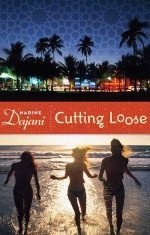
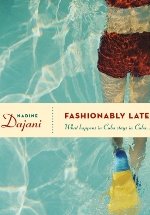
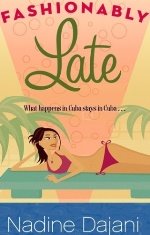
Fashionably Late has a new paperback cover, with a bonus sneak preview of Cutting Loose included at the end!

Eeek!!!

I am totally tickled pink.

Thursday, February 28, 2008

Hope and Other Dangerous Pursuits

There’s a writer I’ve been wanting to blog about for a while now but wanted to wait until her book, Hope and Other Dangerous Pursuits had arrived in the mail from Amazon, and until I’d finished reading it.

It’s a thin little novel, less than 200 pages, and worth all the hype I’d previously read about it. The author, Laila Lalimi, is the creator of a popular blog, Moorishgirl (the site has since changed names to simply www.lailalalami.com/blog) where she covers a fairly wide range of topics about contemporary literature, Arab issues at large, literary Arab figures, and Moroccan issues in particular. Lalimi herself is a transplanted Moroccan, now a lit professor living in Portland, Oregon.

What I really like about Lalimi is her grace.

She tackles some very serious, sad stuff without anger or virulence, something most passionate, opinionated people have a hard time with, with elegant, understated prose.

Hope and Other Dangerous Pursuits may be about a raft full of Moroccans from wildly different walks of life about to cross the dangerous Straits of Gibraltar to a (one hopes) better life in Spain, but as the collection of character sketches unfolds, we see the life of the illegal immigrant in all of its tragedy, melodrama and universality. It’s a book about very specific people and very specific circumstances and yet it’s one of the most relevant books I’ve read in a long time.

Take the current illegal immigration crisis in the States. I hate to break this to those of you who think that America (or any country) belongs only to its citizens, and who support anti-illegal immigration laws, but we’re about to find out what “immigration crisis” really means.

Americans (and Canadians) should count themselves very lucky as the poor masses that come sneaking into their country come from one direction only. You’ll have a much easier time protecting your borders when your country is isolated from all sides but one by oceans (and in Canada’s case, icebergs). It’s not as easy for, say, Chinese migrants to hop onto a raft and paddle their way to California as it is for a Moroccan to make it to Spain. Fourteen kilometers, Lalimi writes, is all that separates abject misery from a life of human dignity.

Another important point is capacity. If the entire population of Cuba were to take to inflatable rafts, that’s just….. eleven million souls. I bet Florida (population: 18 million) could take half of them on without too much trouble. Eleven million… that’s 6 million less than how many people call Cairo, Egypt home. And we are talking about the United States of America here, the world’s largest economy by a few light-years. We are also talking about a country (like Canada) with massive tracts of yet-uninhabited land – not because there’s anything wrong with the land, mind you – just because people would rather live in New York, or LA, or Phoenix, or Miami.

We’re not talking about, oh, I don’t know… Syria.

Syria’s population is 19.4 million. Syria, as a consequence of the Iraq war, has absorbed 1.2 million displaced Iraqis.

Would you like to know how many “innocent Iraqi civilians” the United States has absorbed?

800 since 2003. That’s an average of 160 a year, for five years.

800 people??? 100 people came to my launch party last year… that’s 12% of the total amount of Iraqi refugees accepted into the United States since the start of the war!!! (They have since signed-on to 7000 more in 2008, after some much-deserved hoopla over the disgustingly low figure. Will they honor the promise? Who the heck knows)

800 out of a population of 300 million is… my calculator doesn’t have enough space for all the zeros in this one.

1.2 million out of 19.4 million?

That’s a 6% population increase in just half a decade.

And we’re talking about just one war, one tiny little man-made crisis in a world that’s going to see massive displacement of peoples as a result of natural disasters, rising water levels, and more pronounced inequality than the world has ever seen.

Over 2 million refugees created by the Iraq war. How many refugees will be created if a big portion of a southern Indian province is lost to rising water levels? Who will “absorb” those people? And what kind of life awaits them in their adopted countries? What future awaits us all if we continue to treat these Global Untouchables as “surplus humanity”?

It might be time to start talking about the “immigration crisis” as it really is, as opposed to how we imagine it to be in our pampered, sheltered little fantasies.

Read Hope and Other Dangerous Pursuits. It’s a good start.

Tuesday, February 26, 2008

Can Someone Please Explain Paulo Coelho to Me?

First off, does everyone know what I’m talking about? It’s been a little while since Mr. Coelho’s come up with a new novel, but for the past few years, all I ever saw when I walked into a bookstore were huge displays of Paulo Coelho’s various books, and all I ever heard were people raving about The Alchemist, or gasping about the “controversial”, salacious Eleven Minutes.

And by “people” I don’t mean people who read widely and regularly, but that mysterious third party who decides what ‘everyone’s watching’ these days, or who were the best dressed celebrities at the Oscars, etc, etc.

Sometime after The Alchemist had snuck into my consciousness somehow (don’t remember anyone recommending it to me, or reading any articles about it, so can only assume the bookstore hype got so bad that my brain could no longer ignore it), I came upon a copy of Veronika Decides to Die. That, I thought, sounded far more interesting than The Alchemist. And for most of the novel, Coelho actually lived up to this image of a genius writer I had built up in my head. I LOVED this book.

Until I finished it. It weighed on me like a supersized double Big Mac with extra cheese.

Something about it was not right. I’m not quite sure what. But now, halfway through the ‘salacious’ Eleven Minutes, I think I may have it figured out.

I think Paulo Coelho appeals to the masses the same way that guys who paints ‘light’ in and quaint country cottages does.

McLiterature? McPhilosophy? McSpirituality?

McCrap.

You can scoff and call me a snob, but I would rather read Danielle Steel than a guy who feels it’s necessary to place his philosophical gems in brackets, in mid-action, mind you, rather than have the readers figure it out on their own from the writing and story itself.

I don’t think that the fact I can’t appreciate Paulo Coelho’s body of work as much as the millions of people out there who do is because I am a literary snob. I write chick lit for Pete’s sake.

I just think Mr. Coelho appeals to people who don't have time for nuance and subtlety. Which is not most writers, or people who read widely and often. It’s like bite-sized literacy for the hurried. Or men. Which probably explains why his books are so thin.

Anyone out there have a favorite Paolo Coelho book? ‘S okay, you can tell me. I did find the ones I read entertaining. It was just the aftertaste I wasn’t too happy with...

Friday, February 22, 2008

Rx for the Winter Blues

I popped into Chapters on the Grande Dame of Montreal shopping streets the other day, Sainte-Catherine, to gaze upon Fashionably Late for a few delicious moments (yes we newbie novelists do that every once in a while… quite pathetic, I know), and lo and behold, but it wasn’t there! I was mad. This is my home town, after all.

But right there in front of the fiction titles shelved against the walls is the ‘Travel Lit’ section. And what do I see in between a book about adventures in Mexico and one in India, but Fashionably Late.

I am shelved in Travel Lit.

I don’t know why but that gives me the chills. Happy chills. Thrilled chills.

In between the few articles I wrote for Atmosphere Magazine (will post links to these soon) and Fashionably Late, it seems I’ve become a travel writer.

And I could not possibly be more thrilled. It’s the kind of vocation the universe gently nudges you toward because it knows what’s good for you, even if you don’t.

What does this have to do with the winter blues? It’s winter, it’s cold, dark and depressing, and I’m going to seriously regret upping my chocolate intake levels, so for me, the next best thing to running away to a wonderful, exciting place when my life is in a phase I’d like to skip over is to watch a movie or read a book where other people are running off to wonderful, exciting places and having the time of their lives.

In writing as in life, nothing jolts a ho-hum plot quite like a vacation. Here’s a sampling of some of my favorite trip-lit. I’m sure there are lots more I’m forgetting about, so I’d love to hear what your favorites are.

The Buenos Aires Broken Hearts Club by Jessica Morrison – Recently fired 30-year-old self-described obsessive planner goes on a totally unscripted, unplanned trip to Argentina after catching her fiancé in bed with a hot cellist. Plot meanders a bit, but I learned lots about Argentina and was quite taken by Argentine hottie Mateo.

Burning the Map by Laura Caldwell – The first chick-lit-travel-lit I ever read and a big source of inspiration behind Fashionably Late. Three best friends head off to Rome and Greece just before the lead chick, Casey, is shackled to her first out-of-school job at a Chicago law firm. Caldwell is a great writer and turns what could be a predictable plot into a really fun adventure. Characters are very well drawn, and both Rome and the Greek isles sound like breathless fun.

Eat, Pray Love by Elizabeth Gilbert – This book has gotten so much press already, and I am absolutely honored beyond belief that it comes up as a suggestion to customers who enjoyed Fashionably Late on Amazon.com. It’s a travel memoir of a woman getting over a nasty divorce (pretty typical s far) across Italy, India, and Indonesia. It’s really the author’s style, humor and with that carry this book, and the fabulous sections in Italy and Bali. India was a bit lackluster as it focused on the author trying to achieve ‘inner peace’ in a high-profile Ashram, and could have been cut shorter, but I guess in the end this is a spiritual book that reads a lot like a fun, reckless, escapist, sexy novel, but it’s still mainly about teh quest for inner peace. It's the kind of spirituality an atheist like moi can have respect for. Reminds me a lot of Anne Lamot’s style.

• Under the Tuscan Sun (the movie) – Rent it when you’re feeling blue. Guaranteed to lift your spirits.

My Father the Hero (movie) – This is a mediocre Hollywood 1994 remake of an old French movie starring Gérard Dépardieu. I can’t say much about the plot as it’s been a while since I’ve seen it, but I’ll tell you this: the cinematography, the shots of the Bahamas were so stunning, they’ve stayed with me all these years. Time to rent it again, methinks….

Cuba Diaries: An American Housewife in Havana by Isadora Tatlin – The title is pretty self-explanatory. The author’s insights into daily Cuban life are fascinating even though we get a deep look at the small miseries of life in Havana mixed in with the author’s growing and strange attachment to the city. As someone who’s come into close contact with Havana and her locals, I can assure you the author gets it just right.

Something Blue by Emily Giffin – Not sure whether this really qualifies as travel lit as the protagonist only flies to gray, dreary London about a third of the way into the book when her baby daddy leaves her pregnant with twins and her ex-best-friend is about to fly off to Hawaii with her ex-fiancé on what was supposed to be her honeymoon, but this is a great example of spicing up a meandering plot with an exciting trip. I also went to London solo a few years back and it was really cool seeing the city through the character’s eyes.

Seven Sunny Days by Chris Manby – Set in a resort in Turkey, I would have loved to see the author delve into the culture provided by this unique setting, but she stuck to predictable, self-absorbed characters that epitomize the McTravel experience: sheltered behind the high walls of a gated resort where the only local you’re likely to run into is the one cleaning your toilet. Even the “local” love interests are French, not Turks. And yet….. if you accept that you are in a resort that might as well be in Mexico or Belize, Manby does a great job of making you feel like you’re right there with the three girls on a hen trip, the bickering couple, and the studly tennis pros. And to be honest, I’ll take a canned resort experience over February in Canada any day.

Anybody else have any suggestions out there?

Tuesday, February 19, 2008

The End of an Era


I don't check the evening news for one night - ONE - and this is what happens. Fidel Castro, after nearly fifty years of uninterrupted rule, has decided to step down.


The Earth's rotation won't reverse course, life as we know it won't come to an end, and yet... this is still the end of an era and the beginning of something more nebulous, uncertain, even scary. No matter how much some people out there hated Castro there’s some comfort to be had in old hatreds, and change is always met with a bit of cynicism. Who says Raul won’t come down harder on individual freedoms? How will the US react (or not react…) to this development?

We’ll see.

I’m just glad he announced his retirement just before I handed back my copy edits for Cutting Loose as there’s a teeny tiny reference to the caballero in there and I need to adjust accordingly… Gracias, Fidel!

As for Fashionably Late... I think it's now officially a "historical" novel ; )

Thursday, February 14, 2008

What Do Mexican Buses and the Veil Have in Common?

Here’s an interesting post from Alisa VR, this time about a group of Mexican women who, fed up with the groping and taunting they get everyday on the overcrowded public buses, complained to the authorities. Now they get to ride same-sex buses and are loving it.

Many months ago I blogged about the veil and why it’s not an oxymoron for progressive, liberal-minded women to support the wearing of it if the decision is a voluntary one, and that the veil stands as a symbol of liberation for some women, not oppression.

It’s a tough stand to defend to Westerners because of the particular way modernization unfolded over on this side of the world, unhampered by outside forces, unfettered by oppression, and fed by unparalleled economic super-growth that spanned several decades.

Even when times were tough, Americans and Western Europeans collectively decided to change some values, tilting them towards modernism, to preserve their economic gains. After WWII for example, suddenly, a woman didn’t have to be pregnant, barefoot, and doing the laundry by hand anymore. She could get herself a job and buy a washer and dryer set instead. She’s had to get a job during the war anyway, and society didn’t collapse, after all. Then, suddenly, it was seen as a good, privileged thing to have a proper education (even if the more privileged of the women who got it just ended up marrying well and staying at home anyway) and education for women entered the mainstream, trickling down from the wealthy classes to the middle class. And with economies in North America and Western Europe doing great, with cheap plentiful oil and an expanding middle class, there was plenty of room for women in the workforce. In fact, it became easy to see that how they were an asset to the economy as opposed to a mass of undesirables who took jobs away from white, able-bodied men.

So society’s values as a whole changed.

Now, imagine yourself in a society where there is no middle class to speak of, or if there is one, it’s extremely vulnerable to the slightest economic, military, or natural disaster. There isn’t enough money to provide clean water for everyone, much less education. Over the last hundred or so years, this society has managed to get its act together, had a revolution or two, where, for a brief moment it looked like everything would be okay and everyone, even women, would have the privilege of living with a modicum of human decency (no more middle-of-the-night raids, slave wages, widespread rape and prostitution, lack of sanitation, etc…).

Then, for whatever reason, the revolutions failed, or outside forces intervened to make sure everything would stay as it always was, which is to say that the same benefits would keep flowing to the same people, and the miserable would stay miserable.

Under such circumstances, people don’t really have the luxury of enlightenment. Of choosing their values. In some cases, like that of the Mexican women choosing segregation, the correlation is obvious. The environment is such that it makes men abusive, and segregation is one way to deal with it.

In other cases, like Muslim women clinging to the veil, it’s much more insidious. Tradition and religion have sort of codified male/female relationships insofar as women are expected to be modest because men “just can’t help themselves”.

Because no society lives in a vacuum anymore, people are exposed to alternative ways of living even if those alternatives run counter to their experiences (I’m sure they get Sex and the City in Saudi Arabia, at least by satellite…). So you will naturally get people who yearn for the individual freedoms of a modern society while their countries at large are still buckling under the weight of old oppressions.

Tunisia and Lebanon are usually held up as positive examples of countries where governments are abiding by Western standards of individual rights. The Sha’ria laws of Islam are not followed, women have the same rights as men, are not made to wear the veil (in fact in Tunisia, female civil servants are strictly forbidden from wearing it while on duty). But since they do nothing to alleviate the suffering of their poor (the majority of their population), don’t invest in hospitals and schools, this public image of forward-thinking is nothing but a shallow mask. Large chunks of their populations are reverting back to Islamic extremism (think Hezballah), for lack of any other source of hope.

In these circumstances, I’d have no trouble whatsoever believing a woman who tells me Islam respects her and gives her freedom. Just like I see why those Mexican women might be much happier riding on same-sex buses than being groped everyday on their way to work. I just wish we could stop obsessing over women’s rights in the Middle East to the blind exclusion of all those other things that created the perfect environment for abuse in the first place.

And on that note, happy Valentine’s Day.

Wednesday, February 13, 2008

More Rants on Chick Lit

It’s still a dirty word, like most things female-centric, still pejorative, still snubbed and looked down upon, and judged as one big homogenous blob in spite of the massive range of subjects, themes, situations, characters and moods it covers.

Here’s the hilarious Maureen Johnson’s recent take on the issue-that-won’t-die, which is one of the best, funniest treatments of the topic I’ve ever seen.

I’m not about to add my own voice to the circus as I’m sure I must have done it at some point in the past, and honestly, I don’t care what people call my books as long as they read them and (hopefully) enjoy them.

But the reason I’m bringing this whole thing up again, is because of a book I just finished reading that would certainly fall under the “chick lit” category, and therefore will never be eligible for any kind of literary prize or recognition, despite it being a truly impressively written novel. But because the heroine can probably be described as “plucky”, and certainly funny, plus she does describe her outfits every once in a while (not gratuitously, but as a seamless addition to plot and character), I doubt this book will ever be reviewed as seriously as, say, White Oleander was a few years back (another excellent book, for different reasons) or Wally Lamb’s She’s Come Undone (an awful, depressing look at an obese, sexually-preyed upon teenager on the cusp of entering college).

The book I just finished is Anyone Out There? by Marian Keyes, and based on the cover copy, I would never have picked up a book like this if it weren’t written by the never preachy, always hilarious Ms. Keyes.

Because this book, you see, is about death. More precisely, about the death of the love of one’s life. And I can handle a lot of depressing topics, but this is one I tend to steer clear of.

The genius of Anyone Out There? is in just how deep Keyes takes the reader into the main character, Anna’s, head. So deep, that even though you know her husband died (the rational side of your brain deduced it somewhere in the opening chapter), your emotional side is held completely hostage by Anna’s deep denial. When she finally utters the word ‘dead’ out loud, about a quarter into the book, you gasp. Because you didn’t want to hear it anymore that she did. You, the reader, were just as much in denial.

Also, as it goes with most literary fiction, not a whole lot happens in terms of plot, and yet, unlike most so-called literary fiction, you can’t put the damn book down. It makes you want to believe in the impossible, and yet when you get to the end, you realize that things could not have ended any other way.

Marian’s first novel, Watermelon, and her latest is genius. Now I just wish all those chick-lit bashers would take note that you don’t have to have an unsympathetic cast of characters, a thin an uninspiring plot, unusual situations, and an almost sterile distance from your subject matter to be qualified as a serious writer. Some writers actually manage to be hugely entertaining, highly relatable, and literary at the same time.

Thursday, February 07, 2008

Getting Real About Money

The writing business is a very solitary and insecure one, even at the best of times. It's made even more insecure with contract clauses and industry practices that keep tipping further and further in the publishers' favor. Worst still, writers themselves are a private, guarded bunch who often feel so lucky to be writing at all that they're hesitant to broach the subject of money. Those of us who've been doing this for a few years laugh at that misconception that writers are rolling in it, or even making enough to subsist. Most of us hold full or at least part-time jobs to finance our "hobby", even those of us who publish regularly.

Still, the following post from a novelist I love and admire, who was short-listed as one of Time Magazine's 50 most influential Hispanics in America, and whose debut novel was optioned for film-production by none other than Jennifer Lopez (later put on hold, then repurchased, and currently being produced by another company).

Knowing everything I know about this business, I was still taken aback by this author's account and her honesty, and also her perspective on her situation. It was incredibly brave and selfless of her to go in such depth into an issue most of us are too shy, guarded, self-conscious or afraid to discuss.

Thanks you Alisa, for your honesty.

Tuesday, February 05, 2008

The Thinking Chick’s Reading Guide

For some reason, starting last August and lasting through to January, I took a chick lit break. Sometimes there is such a thing as too much of a good thing. And I’m worse than most in that I tend to gorge myself on one thing (like, say, authentic Lebanese shish taouks) until I can’t look at it anymore. I did it with the Oprah book club back in its early days, with Danielle Steel novels when I was twelve (although maybe in that case it wasn’t so much that I got sick of them, but that I realized they were all exactly the same sometime after I turned thirteen…), and I think I did it again with chick lit. And because I’m not much of a genre reader (I honestly believe that the thematic and writing range chick lit provides makes the label ‘genre’ very loosely applicable to it), it leaves me with slim pickin’s when I decide to get off a particular kick. Luckily, after Dona’s How to Salsa in a Sari, and Marian Keyes’s Anybody Out There, I think I’m back in the game.

So what did I do all these months, besides moping over winter and frantically racing against time to get the Cutting Loose manuscript in?

Here’s a partial reading list:

Girls of Riyadh by Rajaa Alsanea

I wanted to blog about this book the second I finished it. It wasn’t particularly well-written, nor especially hard-hitting or even tightly plotted. It was nonetheless a page-turner. Think of it as the chick version of The Satanic Verses – rocketed into bestsellerdom by virtue of its subject matter and the utter stupidity of its critics.

I lived in Saudi Arabia until I was nine, though not in mind-bogglingly restrictive capital of Riyadh, but in the slightly more palatable coastal city of Jeddah (based on this, I have a theory that give any city – even one in Saudi – a beach, and you’ve automatically upped it a few notches on the coolness index)

I also read this book to get a better handle on the Ranya character I wrote in Cutting Loose (she grew up in that milieu). Because even though I wasn’t one of those “Girls of Riyadh” (too young and blessed with parents who did not consider me chattel to qualify), in the eye of my mind I can still see those girls. And they really are something else, even in the conservative Middle-East. The book was controversial because apparently the Saudi Big Wigs are upset over the suggestion that their daughters actually have feelings besides piety and devotion.

It was also an interesting study in perspective for me. I read this book, and got it. I have no issues with believability, and I didn’t think it was sensationalized or exaggerated in the least. Also, the book doesn’t give a lot of cultural background – it’s clearly intended for an Arab audience (methinks). In fact, my cousins who’d read it in the original Arabic (it was published in Lebanon and banned in Saudi Arabia – surprise, surprise), were shocked it had been translated to English.

Still, I couldn’t help but wonder – what would a “Westerner” reading this think? This is different from the Princess accounts which expose an extremely narrow, rarefied world of tribal royalty. Despite its very specific subject matter, this book remains a commentary on society and male-female relationships in general. But from a perspective I’m pretty sure most of you have never been exposed to.

I would love to hear from any “Westerners” who’ve read it. I’m almost afraid to recommend it – it’s one of those books that should come with a warning label: Please do not generalize to the entire Middle East.

It was the cat’s pajamas back in August, all over the airports and bookstores, so if you’re looking for something still within the women’s fiction realm yet very different, read it, and tell me about it. I’d love to shed any light on any queries you have, or answer any “is it really like that???” type questions.

Moving on… The Shock Doctrine by Naomi Klein.

This is the first economics book to make me cry. I’m talking genuine misty, wipe-the-corners-of-your-eyes crying.

It’s about 650 pages of text, and maybe another couple hundred of notes. A little on the long side, but you don’t notice until around page 500.

To say it’s about economics is a little bit misleading, seeing how thorough and well-written, and yes – tightly plotted – it is. This is a work of non-fiction, but almost reads like fiction. Which goes to show, good writing is good writing, and always a joy to read, even if the subject matter is tragically real.

The introduction is set in a devastated post-Katrina New Orleans and recounts a simple scene that encapsulates what the entire book is about. The next chapter introduces the reader to a Montreal woman who went to the psychology ward of McGill University back in the fifties because she was often depressed and wanted to get a proper diagnosis. Forty years later she would successfully sue the government of Canada for having turned a blind eye to the torture techniques that were tried, tested and perfected on her, and on others, in the halls of that venerated university (it chills me to think this happened in my city, at a University I might have attended had I not gotten a scholarship somewhere else). The inhumane testing done on this woman would eventually become a torture instruction manual referred to as the Kubark manual used by the CIA, a sophisticated new kind of torture that uses the shock element rather than say, randomly plucking people’s fingernails off, to get suspects exactly where you want them.

The premise of Klein’s painfully detailed and thoroughly documented book is that over the past fifty years, this kind of coercion method was used to get whole societies to make decisions they wouldn’t otherwise make, if they didn’t happen to be in "shock", and that ultimately devastated them and their societies.

Not bad for an economics book. If you’re at all curious about why a place that looked as economically promising, almost like a fully developed economy with a healthy middle class as Argentina can suddenly and without much warning just collapse, this is a great reference. And written more like a novel than a reference book. As a bit of a history and economics geek, I personally could not put this one down, even though it was directly conflicting with my own writing schedule, and I’m going to read it again, because there was just too much information to absorb all at once.

And then there was The Upside of Down by Thomas Homer-Dixon.

This is a peculiar little book that tries to be strangely upbeat even as it details the utter collapse of society as we know it, in only the way really gung-ho scientists can be. “Gee, Irv, isn’t it fascinating how the complex-connectivity that brought us the Internet, abundant food and the cure for polio will also be at the root at the complete obliteration of civilization?” said the bespectacled, rotund man to his colleague as they examined the glowing green liquid in the glass beaker.It starts with the author’s trip to the Coliseum in Italy and concludes among the ruins of an ancient Roman temple in Baalbek, Lebanon , is chock-full of scientific notions and ratios like EROI (Energy Rate of Return) in between, and is not an especially easy read, but is absolutely fascinating (I would have never picked it up had it not won a bunch of awards in Canada).

The basic premise is that we’re screwed, and not just because we’ve depleted the cheapest and most efficient type of energy known to mankind, not just because of global warming, or overpopulation, or resource scarcity that will result in increasing political instability and terrorism, but because all these things are going to smash into each other at a time when global connectivity has never been higher. The butterfly effect to the power of a gazillion. It might have been a little bleak, to be honest, if the author wasn’t so positively giddy about that fact that it was high time our system broke down and made way for something healthier, more positive, and more sustainable. I’m not sure how he pulled off being so “zen” about the whole thing, but he did.

And then I rewarded myself for all this brainy reading by picking up Madeleine Wickham’s (AKA Sophie Kinsella) Cocktails for Three, about a trio of best friends keeping some pretty juicy secrets from each other.

Stay tuned for musings on the writing “process” tomorrow, seeing as I just completed Cutting Loose and have craft/writing on the brain.

Besos,
Nadine

Sunday, February 03, 2008

New Year, New Look

It wouldn’t do after three (okay, four) months of blogosphere absence to just shrug and say I was busy.

I was – finishing up my second novel, Cutting Loose (yup – it’s got a real title now!), not to mention settling into a new job in Montreal doing something wildly different from what I did in Cayman – but those would just be excuses. I’m not sure why I feel compelled to be so honest on something the entire universe has access to, but hey, I do just that every time I put pen to paper and write a scene. Why should a blog entry be any different?

I’m having some very mixed feelings on adapting back to Montreal life. And mixed feelings make good blogging pretty difficult. It makes you question – what’s the purpose of a blog in the first place? Is it a soapbox (that’s pretty much what I’ve been using it for lately)? A place for uncensored, disjointed, and totally random thoughts (kind of like how this post is turning out…), or a place that brings together people with some sort of common interest(s)?

Blogging for me has been, I think, if I look back on two and some odd years I’ve been doing this, largely a matter of mood. More direct and transparent than fiction writing, it’s still a way of connecting what’s rattling around in my head with my friends and readers.

So, as I sat in the Second Cup on the corner of Sherbrooke and Claremont, watching the frost forming at the edges of the glass of the windows and huddling tighter into my thick scarf every time someone swung the front door open and subjected me to a blast or arctic wind, it was probably a good thing that I didn’t let anyone one in to the jumbled mass of miserable thoughts rattling around in my head.

As much as I love being close to my family again, my fabulous sex-and-the-city-like life, complete with a fun, downtown apartment and weekends dolled up and out on the town, and a fun new Rachel-esque job as a buyer for a Canadian clothing chain, I haven’t managed to kick Cayman out of my system yet.

Maybe it’s the weather. When people used to ask me why I’d picked up and moved to the Islands, I always listed weather before money, and three months into an interminable winter, I realize now that this really was my main motivation. Even as I write this, I’m sitting in a cute little writing “nook” set up in my kitchen, right next to an big old window overlooking very Parisian-looking rooftops below, but… it’s snowing. Again. And as much as I’d love to pick up and go to one of those Montreal cafés and bookshops I constantly reminisced about while I was away, I just can’t bring myself to bundle up in a heavy-duty winter coat that makes me look like a miniature Yeti. The fact that it’s a Michael Kors does not make it any easier to fool myself into thinking I look remotely fashionable (or even human) every time I slide it over my shoulders. And the adorable plaid one with the bell sleeves from Zara, and the sleek black one from Guess, both hang idly in the hall closet, virtually unworn, as it has been way too cold and snowy for these “medium duty” coats.

See? A whole paragraph on the miseries of winter. So it’s probably best I haven’t been blogging.

But why now, you ask.

Well, this past month has marked a number of signposts on the old writing path that deserve to be commemorated, and that are making itch to jump back into the game.

At the turn of the New Year, not one but two of my very dear friends and critique partners – ladies whose support, opinions, and words of wisdom did so much to improve my work have seen their own babies hit the shelves.

I had the chance to see Wendy Toliver’s The Secret Life of a Teenage Siren back when it was a mere flicker in Wendy’s mind, and now it’s a full-blown novel on a shelf right here in a Montreal bookstore. I’m so proud of her, I could burst. Even though I’ve read several drafts of the manuscript, seeing it looking so… book-like… as opposed to a Word document is making me want to read it all over again. If you enjoy Young Adult fiction, or have kids who do, this is a great one – fun and well-written, and light-hearted with a dose of Greek mythology on the side.

And then there’s Dona Sarkar’s How to Salsa in a Sari. Even though it was Dona’s adult fiction, not her YA I’d helped critique, I’ve had a special place in my heart for this one. I’m usually total rubbish when it comes to titles but for some odd reason, Dona’s theme of Latin-culture-meets-Afro-Indian-culture struck a chord in me, and so when we were discussing title ideas, that one just jumped at me, with no brainstorming or excessive head-breaking needed. Now that’s I’ve read HTSIAS cover to cover, I can see why the themes hit home so much. Which brings me to my next tangent…

Cutting Loose, my second novel, a loose spin-off of Fashionably Late involving Ali’s deeply traditional cousin Ranya’s efforts to break free of the judgments of not just one but two societies, was finally finished, polished and handed in to my editor on January 8th.


This one was so completely different from Fashionably Late, on so many levels, it nearly drove me nuts.

For one thing, I’ve always had kooky, eclectic and widely ranging tastes. I’m not someone you can easily box into category, and while that sounds like a desirable, highly evolved trait to have, it can be quite annoying most of the time. Because our society is built on categories. White. Black. Brown. Anglophone. Francophone. Allophone. Brainy. Ditzy. Alternative. Mainstream.

Sometimes I want to look around at everyone around me trying to smoosh everyone and everything into a box and scream – isn’t it all relative??? At various points in my life, I’ve been slotted into every one of those categories listed above (except maybe 'black') – relative to who I was talking to.

In the Middle East, I’m white. In North America (particularly in her airports – thank you, Miami Homeland Security! I love you too!), I’m brown. In Quebec I’m technically an allophone but effectively and anglo, and in the rest of Canada I’m a Francophone. They haven’t come up with an “Arab” category in the census yet, not to my knowledge anyway, so those were always a gas to fill out.

But I’ve ranted about all of this before.

The point here, is that with Cutting Loose, since it was on contract (meaning people were actually expecting me to write something, and I had much less groveling and sucking up to do than with Fashionably Late), and since I’d proven to myself that I had at least an adequate grasp of the writing craft, I was free to take some chances with themes I really cared about.

Dona’s How to Salsa in a Sari and Cutting Loose have this in common, that you would be hard pressed to box them in. Dona’s main protagonists are, after all, African-Indian and Cuban-American. In Cutting Loose, they are Lebanese-Muslim, Palestinian-Christian (and yes, your religion has a very tangible effect on your life in the ME), and Honduran-American.

So which section of the bookstore would these novels find themselves?

Why, mainstream of course (in Dona’s case, mainstream YA). Because when you challenge people’s notion of categories and labels, sometimes you succeed in transcending them.

Congratulations Dona and Wendy – you’ll be hearing more from these ladies just as soon as I get into a more regular blogging groove, which, though not an official resolution this year, is something I really want to throw myself into this year.

(The official resolution, of course, is to hit the gym regularly and maintain my svelte, post-winter-depression body weight. If I am grateful for one thing in my life is that stress actually makes me lose weight. Thank God for small mercies)

All the best in the New Year, and for those of you in the Big Old Nasty North, hang in there, at least January is over.

xxx
Nadine

Friday, September 28, 2007

Being Palestinian: A Blessing or a Curse?

Even while on assignment in Cuba last week, my Palestinian origin caused a little bit of a stir. I guess it must be like coming across a rare species of bird that's about to go extinct... there aren't very many of us, less than 10 million in the whole world.

What was special about this stir was a comment from one of the reporters, an Argentine travel writer: "I would have liked to be Palestinian," he said.

The comment didn't surprise me because it's a notion I've wrestled with my entire life. Being Palestinian: love it or loathe it?

Being Palestinian isn't like being Egyptian, or Swedish, or Saudi Arabian, or Bolivian, or even Cuban. The closest thing I can think of is being Kurdish - a large nation with history and roots in the Middle East but denied a national territory - but even that's a little different.

When you are Palestinian, your mere birth is an act of rebellion.

For decades, entire PR campaigns put forth notions that the Palestinian people had no presence in history, and therefore no claim to any land. There were simply there, and one day they would all die, and with them the idea of Palestine as a modern nation. They would join the Moabites, Canaanites, Amorites of history - people who exist only in encyclopedias. Just like McDonald's came up with "I'm loving it", slogans like "A land without people for people without a land" or Golda Meir's bewildered: "Who are the Palestinians? They did not exist." were introduced and repeated throughout most of my parents' lives and my entire childhood. It took Yasser Arafat, the first and second Intifadas, and later Hamas, to keep the idea of Palestinians of flesh and blood alive and off the dusty pages of ancient history.

When you are a Palestinian, you are a defacto rebel. Che Guevara's steely stare will adorn your walls. You will read Norman Finklestein, Noam Chomsky, Edward Said, Said Aburish and George Orwell and you will always vote the lesser of two evils. You will be asked your opinion on pretty much any political topic under the sun and will be listened to with both awe and skepticism. People will say you are biased and so can't be trusted, and yet they will recognize that something lurks behind your eyes they will never be able to see for themselves.

To be Palestinian is not only to see the world as Che Guevara, Ernest Hemingway, or Simon Bolivar might have - it's to live it every single second of your existence. It's to fight against extinction.

So the socially conscious Argentine reporter might very well have liked to have in his blood that rebel gene rather than have to run after it, cultivate it with curiosity, exposure and empathy, but would he have been prepared to be Rebellion personified, from the day of his birth until the day he died, and every day in between?

I don't know. It's a heavy burden, one I can't say I've always wanted, But given the choice, would I chose to be reborn free of it? It has its good days and its bad days, but overall, yes it's a privilege to be a part of such an important piece of history.

Wednesday, September 26, 2007

Faith, Serendipity, and Eye Candy with your Complimentary Headphones


I lay my head back against the seat cushion and wince at the thought of cracking my laptop open. The latest Jane Green is burning a hole in my carry-on and frankly, I’d much rather spend three and half hours at 30,000 feet in the air with Ms. Green than with my own thoughts and the specter of a looming deadline . Suddenly, a faint smell I recognize from my childhood wafts through the cabin. I inhale sharply, the pressurized air stinging my nostrils, but I need to make sure… and sure enough, there it is, trailing behind that oh-so retro scent… the hot meal cart, complete with aluminum wrapped goodies (and not-so-goodies) but shocking just the same.

No, I wasn’t flying business class for the first time in years – this was Cubana, Cuba’s national carrier, economy class.

That Cubana, complete with a proper (free) meal, a (free) bar service, (free) headphones with which to watch Pirates of the Caribbean 3, and flight attendants who could double as cabana boys would turn out to be such a fabulous flying experience wasn’t even the most shocking part of my surreal week…

- “They’re sending you where?!”
- “Cuba, mom! A tiny little town called Baracoa…”


Just how tiny I wouldn’t know until the enormous tour bus had labored for four and a half hours across narrow, pothole-riddled roads behind ox carts, horse-drawn buggies, bicycles and entire families of wandering pigs.

Four months ago (or what it three? I can’t even remember anymore!), I sat in cubicle aaaaallll daaaaaayyyyy loooooooonnnng.

I was an accountant. It was my calling card to the world, my identity, my future. Even as I felt my soul was beginning to outgrow the label, straining against its suffocating confines, I still took perverse comfort in its shielding, sheltering walls.

But then on day, for reasons I still don’t fully understand, I pushed back against those walls and found they weren’t nearly as thick, as solid or impenetrable as they’d seemed. The world beyond was huge, unpredictable, terrifying, lonely, and unbelievable exhilarating.

Once I was a bored, listless accountant, then I was a fledgling writer, and then, one day, I’m not quite sure how, I was a travel writer, on assignment in a tiny little Cuban town, wandering through streets Columbus had founded, puttering around cathedrals Velazquez had erected and Hatuey, the first rebel of the New World, had tried to destroy, listened to stories of farmers who gave aid and refuge to Castro, Che, and their band of revolutionaries, and trekked up mountains that have stood there for millennia and watched it all.

And I got to marvel at how a tiny little airline from a tiny little island-nation suffering under a nasty ol’ trade embargo could manage to serve me a hot meal on a short trip, a free glass of wine, and hot flight attendants with chocolate-dusted skin to boot.

I guess you really never know what you’re going to get, so you might as well close your eyes, jump, and hope for the best.

Friday, September 14, 2007

Pornified or Free?

My roommate and I were watching a rerun of Fahrenheit 9/11 on the CBC and we got to talking about it, and somehow the chatter degenerated (or elevated? I guess it depends on how you see it...) to the Islamic Fundamentalist movement (Islamism for short, as so far, only a small minority of Muslims adhere to the fundamentalist version, but that minority has certainly grown from irrelevance to a stand-up-and-look-at-me force over my lifetime) and women's role in it. Don't ask.

My roommate is a Christian (Catholic) Palestinian, I am a Muslim (Sunni) Palestinian. Our parents are at the exact same place on the traditionalism vs. leniency axis, which is to say they're liberal by Middle Eastern standards and fairly conservative by Western ones.

Things got thorny when we hit the subject of the veil. My roommate, Arab and traditional though her upbringing was, could not understand how I could defend the wearing of the veil.

"I look at it, and the women who are wearing it with their five kids all under the age of six, and I wonder: how are these women free, how are they not subservient?"

It's not the first time I've had to defend the veil to liberal-minded people (I don't even try with conservative Westerners). It was a common theme at my high school, every once in a while some girl insisting on wearing the veil would make it into the papers, and there would be a debate in class. You can just imagine the debate in my college feminism class (all women) where the (really, really nice) teacher just looked at me with total disbelief when I said I supported the wearing of the veil. I'm used to that look now. What was nice about that particular class was that I wasn't the only Muslim girl in attendance - the other one stared back just as defiantly into the teacher's eyes and defended the veil too. And no, she wasn't veiled herself.

So what gives? I don't actually address this issue much (or as much as I should, maybe) because to me, it's self-evident: I defend a woman's right to wear the veil so I can protect my own right not to.

It's that simple. Something about doing unto others, blah blah blah. When I lived in Saudi Arabia and debates raged the other way (about the importance of protecting our values by not 'Westernizing' ourselves too much, wearing the veil in defence of women's rights, and against the 'pornification' of women, basic modesty, etc...), I, naturally, argued that it's not society's place to dictate how a woman interprets modesty. It's an individual choice. This stand was as popular in Jeddah as the-veil-is-not-a-symbol-of-female-oppression is in Montreal : )

But the veil is a symbol of female oppression! You say. Consider this story.

The idea of elementary-aged schoolgirls willingly blowing their classmates in bathroom stalls and having the whole thing camera-phone-taped for the entire Youtube viewing world to enjoy, is something that, honestly, makes me want to opt out of parenthood altogether. Call me close-minded.

I know this is extreme.(Then again, maybe not....) Whatever it is, it's not the 'feminism' I identified with and clung to as a kid, and hoped would lead women everywhere to self-awareness and power that had been denied us from the dawn of time.

But then, I grew up.

Here's a scenario for you: You meet a guy, let's pretend he's a waiter at the restaurant you and your girlfriends are having dinner at. You make eye contact, he's cute, you think he thinks you're cute, you flirt, and end up with his phone number. You text. He texts. A casual let's-just-hang-out-with-friends date-like rendez-vous is set. You go, you flirt some more, not really thinking ahead of the margarita in front of you. He drives you home, there's that moment of is-he-going-to-kiss-me tension, but you know (c'mon - just admit it) he will. He does. It's good - really good - but you're pretty sure you don't want to come off as easy. But hey - you're single and it's been a while. But still. You invite him up and say IT'S ONLY FOR A DRINK AND YOU'RE ACTUALLY REALLY REALLY SERIOUS. He shoots you that sly grin that just makes him annoyingly sexier, and you proceed upstairs, stopping for some heavy-duty make-out sessions along the way. You fumble with the lock, you are now inside.

You offer to make that drink, but it turns out Casanova was betting that given the right finessing, you'd be putty in his hands. He kisses you, you back off, but hey - it's good and he's nice and you definitely want to see him again, and did I mention it's been a while?

And so it goes. Maybe you have sex, maybe you don't, but it certainly wasn't what you had in mind but you "adjust" your behaviour to a blend of how far you're willing to go versus what you have to do for him to possibly call the next day.

Some women might cry bloody murder at this scenario, blaming the girl for not being forceful enough or clear enough in pushing the guy away, and that it's her fault if she went further than she wanted. Others would say no means no. I think the truth is these situations are so grey that no one really knows what goes on except the two people involved. And these situations happen because women are often complicit in their own objectification: the line between I'm-wearing-this-hoochie-mama-top-because-I'm-an-empowered-woman-in-control-of-her-own-sexuality and I-just-want-boys-to-like-me-and-this-is-the-only-way-I-know-how is so muddled that it's virtually impossible to get a good grasp of the issue.

I invite you to consider that we do have a problem with female objectification in the West, one that can't be placed solely on the shoulders of men, and that we have collectively decided that no matter the cost to our self-esteem, we are not willing to sacrifice, whether freedoms or pleasure, to try and correct this. Maybe it's okay to fall prey to our own weaknesses every once in a while if it means that we can do anything we want, and don't have to depend on anyone, especially not a man, for it.

Now let me invite you to consider another way of seeing things: that the objectification of women is a serious problem in a society where its men have not been properly 'conditioned' to see women as equals. Some men accept that they are not animals and do not behave as such, but other men think that a woman who puts herself on display is in effect, offering herself up, not so differently than our cute waiter scenario, albeit in a much more generalized context.

So the women in this society willingly choose to take the veil 1)as an external sign of their devotion to their faith, 2) because they feel more empowered by their self-inflicted de-sexualization, or 3) in a war/aggression situation where their values are under assault, people will exhibit extreme patriotism to protect their way of life. Wearing the veil becomes like flying the American flag on your lawn, a middle finger to the enemy.

It's a point of view that you can agree or disagree with - I happen to think we should work on "conditioning" men into better behavior - but I can objectively look at my own weaknesses and think: how can I be so smug, so self-assured that my way is the right way, when my version of feminism has somehow produced blow-job giving girls on school buses?

The perverse, radical consequences of regimes like Afghanistan's under the Taliban, or Saudi Arabia's under the Wahhabis for women are just that: extreme distortions of what happens when a group of people gives up some of its rights. In some places, without proper controls or with a citizenry too dehumanized by war or too lulled by riches to pay attention, this is what happens.

In other words, it's not the veil's fault. Please, cut it some slack, and stop inflating its importance as a symbol of oppression, and consider some genuine causes of oppression: poverty, war, theft of natural resources, bad leadership, short-sighted consumerism.

Bright, empowered Muslim women who wear the veil as a badge of honour will shut down if they see even a hint of pity in your eyes with regards to their decision to wear the veil. It's like telling them: you are a poor, stupid, backward girl with no backbone or ability to think for herself. Now let me tell how great America is....

Just like I imagine you would shut down if you thought Muslim women were forming their opinions of Western society based on a few blow jobs on a school bus.