Wednesday, June 11, 2008

GCC Presents... Melissa Senate!


I am BEYOND honored to be hosting Melissa Senate on my blog today since I've looked up to her, along with fellow chick lit trailblazers Sarah Mlynowski, Jane Green, Alisa Valdes-Rodriguez, Laura Caldwell and others, since a career in publishing was but a flicker in my imagination.

Melissa's debut novel, See Jane Date launched Harlequin's dedicated chick lit line, Red Dress Ink (I was an active member of the RDI chat boards, and back then RDI authors were God to me) and was turned into a TV movie. (How cool is that?) Since then Melissa's written five women's fiction novels, and has dipped her toes in YA waters as well with Theodora Twist, and a few other projects she discusses below.

You've been writing since chick lit first caught on in North America. Can you please tell us about the evolution of the genre since See Jane Date up until now - how have the plots changed, how has the readership changed, is chick lit ever-evolving or is it coming full-circle ?

The evolution of the genre is likely a result of the authors “growing up,” getting older and wiser, perhaps settling down into marriage and motherhood—or not. I wrote See Jane Date at age 34. I’m now 42 (she says proudly). Since See Jane Date I’ve gotten married and divorced, had a child, moved from Manhattan to Maine, gave up corporate life for the writing life, and have been through lots of little things in between. I’m such a different person, leading such a different life that I couldn't quite write See Jane Date in the same way again, but I do think the essence of chick lit, what makes it so lovable, so appealing to so many women, will never change: the female experience in the here and now, with its questions and concerns and issues, written with a certain sensibility, a certain tone. There are many books called chick lit that aren’t, and many that aren’t that are! I think there will be as many different types of chick lit novels as there are different types of women in different walks of life. The young writers who might write chick lit now very likely would steer clear of those elements now considered stereotypes, but they’re stereotypes for a reason. Killer bosses and harping moms and bad dates and thank-God-I- have-you-best-friends really and truly exist. I know for a fact!


Name a book that you wish you’d written

Good Grief by Lolly Winston. I love this book, love its poignancy, its humor, its heart. Lolly Winston’s sentences have the most delightful energy. I’d like to write as freely, as lushly, as funny as she does.


Name a book you’ve read over and over again, and you’d probably read again in the future.

Birds of America by Lorrie Moore, a collection of amazing short stories. I’ve read it at least five times and will re-read this summer. There are sentences and paragraphs and ideas that zappers that get me every time with: Wow. Just wow. My favorite book on writing that I reread constantly is Making A Literary Life by Carolyn See. But I love Stephen King’s and Anne Lamott’s too. I’ve read each at least five times too!


What typically sets off your thought process when beginning a new book – a kernel of a character you’d like to get to know better, a flash scene, a gripping ending you need to trace back to the beginning…?

Questions To Ask Before Marrying started off with three very different ideas that had me gripped: The first was my love of the movie Sideways. Oh, how I wanted to write a road trip book after seeing that wonderful film. The idea of two very different people trapped together in a car, being on the road, really gripped me. Enter my estranged twin sisters, one a conservative school teacher from Maine, newly engaged but with serious feelings for another man, and the other a professional muse and face reader from NYC who is searching for the father of her unborn baby (would help if she knew his first name). These two hit the road with many questions and get to know each other—and themselves—very well three-thousand miles later. The second idea was divorce, something I was personally going through while writing this book. I wanted to go “back to the start” and explore what you know when he slips that ring on your finger. The third was a New York Times article, the most popular of 2006, a simple and practical list of questions couples should ask before marrying or (wish they had). The article gave me my title and honed the theme for me, which is that asking questions, even questions without answers or answers you don’t like, is the most important thing you can do.


Can you tell us about any real-life events that inspired a scene or two in your book?

Ruby and Stella have a long-lost father they haven’t seen seen or heard from since childhood—and so do I. But mine didn’t run off with a casting agent and 10% of my earnings as a toddler models (not that I was baby model!) they way Ruby and Stella’s did. I often write about issues of parental abandonment, whether via death or choice. I’ve learned quite a bit about the way I feel about it all. One of the best things about writing!


What up next for you?

I just signed on with a new publishing house, Simon and Schuster’s Pocket Books, for my next two novels. The first is about an unmoored New Yorker who discovers she has a half-sister she never knew existed in a small town in Maine. Off she goes. At this very moment, I’m finishing my second YA for Delacorte. It’s called: The Mosts and the Most Nots, about a Most (most popular) who is recruited by a Most Not to change her into someone who won’t make the Most Not list this year. Both girls go through a major emotional transformation. I was neither a most or most not in high school, but for some reason I love to write about girls on either end of the spectrum who change each other’s lives. This is pretty much the core of all my noves, YA or adult.


What’s the most useful thing, in terms of promotion, that you’ve done?

Honestly, I think blog tours, like the GCC, have been the most successful in getting the word out that I have a new book out, a shot of the cover, links to where to buy, etc. I read a bunch of blogs every morning and always discover new blogs via those blogs and always have a list of books I see noted or recommended. What’s particularly wonderful about the GCC is how varied the authors’ works are.

Saturday, May 31, 2008

Education for Everyone? Not so Fast...

It's hard to make a case today, in 2008, that it's okay to discriminate based on race and ethnicity when it comes to access to education.

I'm not talking about money, the old: it-would-be-nice-if-everyone-who-wanted-to-could-go-to-Harvard-but-let's-be-realistic-here argument - I'm talking about turning down someone who'd qualified for a scholarship on the basis of his or her race.

No, this is not happening in Somalia, Iran, or North Vietnam.

It's happening in America, sort of. Under America's nose, even though America issued the scholarship.

If there's anyone out there who doesn't think Gaza is effectively (and not metaphorically) an open-air prison, here's some food for thought: 7 Palestinian students who had qualified for and been granted Fulbright scholarships have had their scholarships revoked. Why? Did they have suspicious records? Nope. Had someone, somewhere thought they may have ties to terrorism? Guess again.

Israel will not let them out of Gaza, so they can take up the studies they earned the privilege to undertake, because Gaza - the whole city, and everyone in it, is under siege. And what does America, whose tax dollars flow like wine at an ancient Roman orgy to Israel's treasury, have to say to its favorite ally in the Middle East? Right then, we'll just go ahead and cancel the scholarships, no worries... would you like us to get that bar of soap you dropped while we're at it?

Here is the New York Times article - feel free to read it for yourselves and enlighten me in case you come upon a "oh, right, that makes TOTAL sense!" moment I might have missed.

Friday, May 30, 2008

Why Writing Rocks, Reason #981


... You get to read about all kinds of stuff just because it sounds interesting/off-beat/might-want-to-put-in-a-book-or-article-one-day, and it's called "research".

And then when you find yourself standing on a yacht deck one fine, starry evening, fizzy cocktail in hand and the sequins on your dress catching the moonlight, you get to inject otherwise boring cocktail party conversation with nuggets from this so-called "research (e.g: Did you know that The Palms Casino and Hotel is owned by the Maloof family, fifth-generation Lebanese dynasty founded by a common peddler? No? Well...)

Or, say, in someone's backyard in Winnipeg, a Molson Dry in hand, swatting mosquitoes with the other. It's all good.

I bring this up today because I've just returned from an adorable indie bookstore down the street with a book I'd flipped through before, wanted to buy, but told myself I own way too many books as it is, and so begrudgingly put it back.

Until today, when I proudly returned to the store, and bought it.

The book is entitled "The White Guy" and is a tongue-on-cheek look at your regular, beer-guzzling, football-watching, spending-too-much-time-at-the-office-to-have-a-normal-sex-life kinda guys. In other words, the kind of guys I know all too well, am considering writing about in considerably more depth in my current novel, but am afraid of venturing into cliche territory. You see, I've spent far too much time thinking about one of life's most mystifying unanswered questions: when you ask a man what he's thinking about and he says nothing, could he really mean... nothing? Would that not imply that men don't think of anything, ever? Or are they hiding something from us, which just might be the key to all the misunderstanding between the sexes?

In the course of all this heavy thinking, I did make this one important observation: white guys are a lot more likely to be thinking about "nothing" than non-white guys (and by "white" I strictly mean of the North American, Western European, non-Mediteranean variety). Ask a nineteen-year-old Latino guy what he's thinking about, and he is far more likely to say "how hot your boobs look in that top" than "nothing". Same goes for Arab guys. A French guy might recite you a poem, but the French are generally odd anyway, and a race unto themselves.

So, to rephrase, could the white guy be suffering from an acute inability to communicate, as compared to, say, his Latin brothers (in other words, is the white guy also busy thinking about your boobs in that top but cannot articulate that thought), or have beer, sports, long hours at the office, equating emotional IQ with gayness, taken their toll on the white guy through a slow process of cultural evolution, bringing us to a stage where the white guy thinks that thinking of "nothing" all the time is perfectly normal?

As I said, it's question for the ages.

And to my Winnipeger blog readers, married to quintessential White Guys (I know you're reading this even though you are too lazy-ass to comment), you might be interested to know that the author is a white guy from Winnipeg.

I'll be sure to share my findings with you once I've had a chance to review all the data and make an informed conclusion. Or, maybe you can read all about in my next novel ; )

Thursday, May 29, 2008

Not Your Regular Reality TV Drama

Disclaimer: Please ignore the snippet of commercial and Arabic introduction at the beginning of this video... it's the cleanest one I could find!

Since we’re on the topic of Middle-Eastern hotties and Arabic TV, here’s a little story about a certain Star Academy contestant (this show was adapted from a French version of American Idol) who underwent drama of a different sort than his American counterparts…

The way this show works is that once a certain number of finalists are chosen from countries all over the Arab world, they are then taken to a secluded villa in the Lebanese countryside where they get voice lessons, dancing and music lessons, to prepare for the weekly show, and for the four months leading up to the finale. After each performance, someone gets the boot, à la American Idol.

The purpose of this isolation was sorely tested during the latest bout of Lebanese infighting. The show’s directors contacted the parents and it was decided that the kids were in a safe place, and the less they knew about the political situation, the better especially since one of the contestants, Sa’ad, is Lebanese and comes from one of the affected areas.

One set of parents however, wanted to ask their kid, Abdullah, a Saudi Arabian, if he wanted to come home in light of the situation. So, he was the only one among the finalists who was made aware of the situation.

But then, Abdullah (that’s the skinny one in the yellow t-shirt), upset about all this secrecy, started sowing suspicion among the contestants, and forced the director (the redheaded angry lady) to come clean about the mess in Lebanon… in front of Sa’ad (the tearful hottie… tell me that doesn’t break your heart).

Now, you don’t get that kind of drama on American Idol, do you?

Tuesday, May 27, 2008

So This Blog is Supposed to be About Books...

...but every time I think of a great book-related topic to blog about, I read something which makes my blood boil and it trumps the book post. Sorry.

Last weekend I did something I don't do nearly enough, and that was to read the movie reviews in the paper, pick a movie, and actually go see it. I was very happily surprised to see lots of documentaries out, and one in particular caught my eye: The World According to Monsanto.

Its format is more PBS than blockbuster, but the message was chilling nonetheless. It was about genetically engineered (GE) crops, what's supposed to be so great about them, how, like a whole lot of those fancy schmancy nouveau weapons they keep making grand promises about, they turn out to be crap, and how no one can really do much about it right now. Here's what Monsanto did, in as few words as possible:

1) They invented a really groovy pesticide that killed JUST ABOUT ANYTHING you could think of! It's called "Roundup" (disclaimer: I don't have a green cell in my whole body, much less a green thumb, but apparently this Roundup thing was da bomb for the weed-battling masses).

2) Then, in a stroke of genius, they invented the only plants (well... Franken-plants) that could survive Roundup, called "Roundup Ready". (recap: everything gets coated in a lovely, glossy Roundup sheen, causing everything to die, except for the stuff destined for our plates)

3) Roundup turns out to be a carcinogen, which is a fancy word for "gives you cancer". Well... not so much of a carcinogen as a cancer-enabler. So, it's not so much like an abusive husband, as the mother who tells her daughter to go back to the abusive husband and give him another chance. Roundup messes up your cells enough that down the line, they are that much more vulnerable to cancer.

So far there isn't anything truly Franken-like about this tale. We all know pesticides are bad. But here's the hilarious thing - if you were to walk through a Roundup-sprayed field on a regular basis, your skin would start to fester very unbecomingly, almost like you'd dipped it in acid.

Yes, yes, but think about all the masses of poor who can at least eat! Well... and this was the part that did it for me, it seems that when you mess with nature, nature finds innovative (and deadly) ways to mess with you back. While the Franken-plants were not killed by Roundup, they were vulnerable to pretty much everything else that nature had previously equipped plants to withstand. I'm sure Monsanto isn't terribly bothered by this... it's license to keep coming up with pesticides to kill these old-new plant diseases, perpetuating an eternal circle of treat-kill-treat-kill-treat-kill until human beings start spontaneously com busting when they come into contact with anything sprouting from the Earth. And poor people don't seem that stupid either... Indian cotton farmers figured out, all on their own, that they were getting a better yield (and at far better prices) using non-genetically engineered seeds. So basically, the same stuff humans have been using for millennia. But, in one last shocking twist, when they started requesting the good old regular stuff back... there was none left on the market! Somehow, regular seeds are no longer readily available. I know this sounds kinda kooky, but think about how expensive "organic" food is compared to your run-of-the-mill, icky-yucky-mad-cow-disease-riddled stuff all over the supermarket.

You'd think something grown using old technology (ie: an ox on grandpa's ranch) versus new technology (ie: a humungous factory in Sri Lanka) would cost less. But no - it's all about volume baby, and Monsanto has got volume.

What impressed me the most about this movie was (partly) the sort-of sleuthing-around-for-Dummies approach it took, coupled with some uncomfortable interviews with some high-placed people (Ali-G-meets-mousy-librarian style).

The reporter would type questions into the Google search bar, and all kinds of golden information nuggets would pop up.

I decided to use this approach to try and figure out why oil was so damned expensive. I don't have a car, so I don't care all that much, but since it seems like people are starting to make food-vs-gas decisions, I think this is as good a question as any to pose. Here are my starting points:

1) Iraq is supposed to lie atop the world's second largest reserve of easily-extractable oil (after Saudi Arabia) - how come we mighty westerners can't seem to get a piece of that action and must resort to playing suck-up to the Saudis, who stopped caring what we say or how much we threaten? Don't they know we could pull an Iraq on them and bomb their country back to the Stone Age???

2) Why are we sucking up to Saudi Arabia and not bombing them back to the Stone Age? King Faisal was assassinated for being an oil-snob back in the 70s - what, are we suddenly above callous assassination, or something?

3) No one was making a fuss over this a mere three years ago. What changed? Not Iraq - that happened 5 years ago, and it was pretty clear from the get-go that no one was going to be greeted with any flowers or rice or whatever carb they were expecting. 9/11 happened more than 7 years ago. I remember learning about the notion of "peak oil" back when I was a wee high-school-attending lass, and yet, the idea of "peak oil" was just as popular as "global warming" was a few years ago. Again - what changed?

I Googled "Iraqi Oil" for fun. And then perused some articles about what's happening with oil this week. It was very enlightening.

My favorite was a 2004 USA Today article where the author is freaking out over the idea of "prices far above $50 a barrel, perhaps $60 or more".

Well, it's early 2008 and the current price of a barrel of oil is set to reach... "an average of $141 in the second half of 2008 and to $148 in 2009. OPEC no longer rules out $200".

Wow. That sure put things into perspective for me. You can have fun googling yourself, or check this, this, and this out and see a big picture emerge.

Sunday, May 25, 2008

Turkey's Answer to Brad Pitt


I’ve been spending a lot of time at my parents’ place lately where I’ve been exposed to ungodly amounts of Arabic satellite tv. Besides learning that virtually every single American hit show has been purchased by Arabic stations and repackaged for an Arab audience giving us Arabic versions of American Idol (called “Superstar”), The Biggest Loser, Project Runway (sponsored by the Lebanese crown jewel Elie Saab), Friends, and yes, even The View, there’s a new soap opera that’s been causing quite the sensation in the Arab world right now, and this one isn’t of American origins…

It should be clarified that soap operas in the Arab world run more along the Mexican ‘telenovela’ model, with a run of about 3 to 4 months, than the American version which goes on forever and probably into the next world.

My mother introduced this soap to me like so: “It’s worse than those American soap operas, with this woman having a child from that man, and being separated from this one, and that one having a dubious past… it’s terrible. But the hero is quite an eyeful.”

See for yourselves…

PS: I can’t wait for the Arabic version of “The Bachelor”.

Tuesday, May 20, 2008

Guilty Pleasures and Maggie Marr


Okay, so let’s take a brief reprieve from politics (of course it’ll be brief… I won’t make promises I can’t keep!) and get on my guilty pleasure topic: Hollywood gossip.

I don’t have many guilty pleasures in life, mostly because I’ve come to think that if you’re going to feel guilty about doing something, it takes away half the fun, so do it wholeheartedly or don’t do it all. Or try not to anyway.

Not so Hollywood gossip. It’s certainly a pleasure, and yes, it is sinfully, double-Oreo-brownie-a-la-mode guilty.

Here’s a typical scenario: me, standing in the grocery store check out aisle, clutching a carton of milk and the latest Marie-Claire, trying to look away. But I can’t. I sneak a peak. Brittany has a bump. Jen has found true love – for real this time. Nicole has gained a pound. Suddenly it becomes too much to bear. I tell myself there are still two people ahead of me in line… if I pick one and speed read I’ll manage to take all the crucial info in, no need to waste my money on this brain crack. I know they are lying to me. I know it’s all padding. I know those headlines are exaggerated… but I can’t help it. I am weak. Just when it’s my turn to pay I grab the In Touch staring me in the face (does it snicker at me? Does it know it won?) and fork over three dollars I’ll never see again. Score: Hollywood gossip: one, me: zilch. And so it goes.

Meet Maggie Marr, an author who’s managed to take our obsession with juicy Hollywood insider info and turn it into a novel praised by chick lit royalty Sarah Mlynowski (“Move over Jackie Collins! Secrets of The Hollywood Girls Club is a steamy page-turner bursting with insider Hollywood gossip. I loved it!") and Marian Keyes (“This is a juicy, delicious read! I just loved the insider secrets and the access to what really goes on in Hollywood—the stuff we suspect happens but is always denied by scary publicists").

Who is Maggie Marr, you ask? A bitter ex-assistant looking to do some damage in roman a clef mode? Not quite. Maggie has earned her Hollywood cred as an LA motion picture literary agent, where she’s worked with the likes of Owen Wilson, Cameron Diaz, Ashton Kutcher (eek!), and Reese Witherspoon. And get this… she used to be a lawyer before become an agent and an author, so you just know this is going to be a smart read.

Secrets of the Hollywood Girls Club is the follow-up to Hollywood Girls Club where A-list friends Jessica, Celeste, Lydia and Mary-Anne attempt to beat the plastic-surgery/secret affaires/sex tapes rumor mill to keep hold on to the spot at the top.

Without further ado, here’ s the scoop from Maggie.

Who’s your favorite Hollywood heartthrob?

It's a three way tie...Brad Pit, George Clooney, and Daniel Craig...oh wait… did I mention Mark Wahlberg?

Name three authors at the top of your “to watch” list.

Okay so this list changes all the time! But I have to say..I love Carl Hiaasen. Adore him. I think he's a brilliant writer. His characters are quirky and fun and I always enjoy reading his books. Next...right now...I'd say Janet Evanovich. I just recently discovered the Plum series. I love the pace of Janet's books. How the stories keep moving. And I love the character Stephanie Plum. Jennifer Weiner. I just finished Certain Girls and although I'm a little up and down on this book, I think more because of my memories of Good In Bed than Jennifer's story choices, Jennifer's writing is brilliant and she continues to get better as a writer. So of course, I am always interested in the stories she's telling.

Which book do you wish you’d written?

Carpe Demon by Julie Kenner

Can you tell us a bit about your writing process? Do you have a writing routine you stick to or a special writing space that brings out your creativity?

Let’s see. I love the mornings. I love to be at my computer by 7:30 or 8 am to get started. I have a goal of one chapter a day which for me is about 10 pages. Some days I make it, other days I don’t. But when I’m working on the first draft, whizzing along, I try for ten pages. I work in the morning until noonish and then I take a break and have lunch with my girls. I put them down for nap and write another two hours, from two to four. Usually I’m pretty shot by four pm. I might read or edit in the evening once the girls are in bed, but I don’t usually get much writing accomplished.

Do you have an agent, if so, can you tell us the story behind meeting and signing with her?

Prior to becoming a full time writer, I was a motion picture agent for ICM. I worked full time repping writers and directors. So Hollywood is my home. I started hearing a character voice in my head and late at night when I couldn’t sleep or on the weekends, I would write down the story I was told. This story became the first draft of my first book Hollywood Girls Club. Secrets of The Hollywood Girls Club is the second book in the series and a continuation of the lives of these four fabulous women who live and work in Hollywood.

So while I was agenting, I wrote for fun, in my spare time. It was my husband who convinced me to give four chapters to my friend and colleague (and now agent) at ICM. I gave her four chapters without my name on them, guessing she’d pass and then I could go on about my life repping my screenplay writer and directing clients. But instead she loved it. I finished the manuscript and when she took it out, there were two houses that wanted the book…so I ended up going with Crown. And suddenly, I was a writer.

So… What up next for you?


I just turned in a draft of a television pilot that I'm developing. I also finished the first draft of my third book, a stand alone women's fiction book, unrelated to the Hollywood Girls Club Series. Once I have the women's fiction book complete, I plan on finishing a screenplay I've been writing of and on for a while.

What has being published changed about your life?

I have a whole lot more work! There is the writing, plus the business of being a published writer. I'm always trying to get the word out about the books. Trying to let people know what a fun read they are. The promotion of the books, takes a ton of time. But I can't complain, my life, is truly blessed.


Thanks so much Maggie!

Saturday, May 17, 2008

How Not to Write an Article

I was going to write a nice, tame post about a movie I saw last week and why it reminded me of plotting techniques, but then something appeared on the opinion page of the Montreal Gazette that nearly drove me out of my mind, as happens every single weekend with the Montreal Gazette. (A legitimate question might be: “why do you read the Montreal Gazette, Nadine, when it incenses you so?” and I don’t have a better answer than quoting the Gazette’s branding motto which is: “The Gazette – The English Language, daily”. In overwhelmingly French Quebec, it’s The Gazette or nothing, I’m afraid).

This is how the article, by David Brooks of the New York Times, begins:

“Hezbollah is one of the world’s most radical terrorist organizations. Over the last week or so, it has staged an armed assault on the democratic government of Lebanon.”


Contrast this with what Robert Fisk, award-winning British correspondent for The Independent, author of several excellent books (one in particular I’ve read and that made me cry with empathy, sadness and nostalgia all at once, Pity the Nation) and longtime Beirut resident had to say:

“That [the widely held perception that if Lebanon plunges into another civil war, it’s because of religious strife] is the problem. For the war in West Beirut is not about religion. It is about the political legitimacy of the Lebanese government and its "pro-American" support (the latter an essential adjective to any US news agency report), which Iran understandably challenges.”


David Brooks of the New York Times has also authored a hard-hitting, non-fiction book, so in the interest of full disclosure, I must give you the title: “Bobos in Paradise: The New Upper Class and How They Got There

I must say, it sounds pretty fascinating (plus, it’s on sale!) and I’d love to read it if I didn’t have better ways to send my time than supporting self-important nincompoops pontificating on subjects they know little about, but I digress.

For my problem with Mr. Brooks' article isn’t based merely on his lack of credentials, but it’s because he, and pundits like him, are the reason many people are stunned to learn that Hezbollah (should be written “Hezb’Allah, btw, since it literally translates to “Party of God”) currently holds seats in Lebanon’s parliament and enjoys support from a cross-cultural swath of Lebanese society, which is saying a lot in a tiny country gutted by clashes between its 16 religious sects, ravaged by Israeli military occupation, and destabilized by a large Palestinian refugee population (spilling over from Israel).

Out of the multitudes of guerillas the 15-year long Lebanese civil war spawned, Hezb’Allah was the only one allowed to hold on to its weapons after the war ended.

Why?

Because it is largely due to Hezb’Allah’s military campaign against Israeli occupation of Southern Lebanon, an occupation distasteful even to Israelis themselves, that the south of Lebanon was eventually liberated in May 2000.

So, while the US still considers Hezb’Allah as a terrorist organization, the Lebanese parliament crowned the group with “national resistance movement” status.

Mr. Brooks does not expend time and ink explaining to his readers why Hezb’Allah deserves to be listed among the “world’s most radical terrorist organizations”. Are they as bloodthirsty as say, the Khmer Rouge of Cambodia? The Tamil Tigers of Sri Lanka? Why does Hezb’Allah, a guerilla movement consisting of Muslim Shia leadership more popular among Lebanese of different faiths than say, the Phalangist party (created to represent “Christian” interests) which has lost so much support, even among Christians, as to be virtually irrelevant? I doubt Mr. Brooks is using Hizb’Allah’s killing record as a basis for his conclusion, because until the summer 2006 Israeli invasion of Lebanon, Hizb’Allah’s offensive was targeted at soldiers, and soldiers only. Never any civilians.

Of course, Mr. Brooks would not mention that. This is why Hezb’Allah is the only ex-Guerilla movement to hold seats the current Lebanese parliament. Because when everyone was busy killing each other, Hezb’Allah focused only on driving Israel (and US Marines) out of Lebanon.

David Brooks' opinion piece is not about Hezb’Allah. He is simply using Hezb’Allah to paint Barack Obama as someone who panders to “one of the world’s most radical terrorist organizations” and counting on reader laziness, misinformation and stereotype to advance a point without a shred of backup.

And that, dear readers, is exactly how a principled journalist should never write an article.

For a lucid, short, and easy-to-understand assessment of the current situation in Lebanon, you can read Robert Fisk’s latest piece here.

Monday, May 12, 2008

Tag Love

This summary is not available. Please click here to view the post.

Wednesday, May 07, 2008

Are You Ready?

...for some seriously exciting announcements?

After years and years of waiting (okay - maybe about a year and a half), I have finally made it on to the Girlfriends' Cyber Circuit networking virtual group, which means you'll be seeing a lot more writing related blogging from me in the future. I pledge to try and make my interview questions as quirky and original as possible so that those of you who blog-hop (you know who you are...) don't feel like you're reading the same interview over and over again.

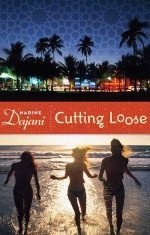
And that's not it.I've been waiting for the relaunch of my website to announce this but it's looking like that might take a little while, so here goes: I've got the galleys for Cutting Loose and I am absolutely smitten with my cover!!!

Take a look:


Getting your cover is one of those moments in the writing process that gets you through the rougher patches and reminds you of how totally cool it is to be a working author.

Well... what do you guys think? Effective? Pick-upable?

Tuesday, April 29, 2008

Movie Review: Goya's Ghosts


I have a friend who once proclaimed that history has little to teach us because it seldom repeats itself. (In her defense, we were pretty young at the time)

But the arrogance of youth aside, I think the reason some people fail to see themselves in the past probably has something to do with self-awareness (or rather, lack of) and an inability to see the forest for the trees.

I can already see people watching Goya’s Ghosts, an excellent movie I rented this weekend (out last summer), and ascribing Goya’s anguish to the cruelty of his time rather than the cruelty of human nature in general, and its propensity towards fanaticism over compassion.

There's nothing subtle about Goya's Ghost, with lines like “in these troubled times [we] deemed it necessary to bring [torture] back….” Of course, the church of the Inquisition never used the word “torture” either, but “the Question”, as in, “if you are put to The Question, God will grant you the grace not to falsely confess to something you’re not guilty of….”

Or: “[they] will shower us with flowers and rose petals in the streets…” the “they” in this instance referring to the regular people in Spain awaiting “liberation” from the monarchy and a corrupt clergy by Napoleon’s army (I'm too lazy to look up the actual transcrips, so there's some paraphrasing here. Sorry)

Goya watches one set of perverted ideals take over another set of perverted ideals, power passed around between a select privileged and lucky few like a game of high stakes hot potato, with regular people shouldering the human cost of this macabre game.

Nathalie Portman was great as an embodiment of human misery and helplessness, in the face of stacked odds and just pure bad luck.

We also get the benefit, throughout this movie, to see some of Goya’s body of work and how he synthesized and recorded all this pain around him. For that alone, I’d say the movie is worth it, especially for art buffs.

Ultimately though, my only beef with artists like Goya (and writers like Flaubert and Zola), who see things as they really are (as opposed to buying in to the optimistic, know-it-all stand of the established powers) and convey them to us as best as they can, is that ultimately they offer no alternative. Maybe this is why human nature is still so vulnerable to know-it-alls. We’d rather follow an asshole who’s convinced of what he’s doing, rather than a guy who tells you “look, I don’t know what the answer is, but this isn’t it. Hopefully I’ll know it when I see it”.

Tuesday, April 22, 2008

Lusting After...


... This Juicy Couture hot pink trench.

What better way to usher in the spring?

Friday, April 11, 2008

God vs. Allah: Using Language to Divide

Once, in my first year out of University, I had the chance to transfer to Hartford, CT with my company for six months. I jumped at the chance seeing as I've always loved travelling, any kind of travelling, even to Hartford in this case (at least I got to see plenty of nearby NYC and Boston....)

I also got my first chance to see real life Americans, in their natural habitat (as opposed to on TV) for the first time (I'd vacationed in Cape Cod for a few days once, which I'm not going to count since the only Americans I talked to were the store clerks).

It's an experience I'll forever be grateful for because the one thing that regrettably gets lost through all the media images of Americans and American culture the world is bombarded with every second of every day, is the genuine niceness and curiosity of the American people. The problem is that there is such a discrepancy between how much of the world they get to see in return, and the little they do see is distorted through media filters. Add to this the phenomenon of American credulity - that unshakable faith that what they are being spoon-fed through TV and politics and Hollywood movies is the truth - as opposed to the natural cynicism of the rest of the world, and you have the conditions for some really bizarre conversations.

Like say this one, with a fellow University student (I took a Spanish class at U of H while working in Hartford).

I can't remember what I was so adamant about, but I was adamant enough to say this to him at one point: "I swear to God, blah, blah, blah..."

At which point he interrupted me with "Wait a minute - you can't say that, you don't believe in God, you believe in Allah."

I think I just stared at him in disbelief for a few seconds, and then tried to explain that "Allah" was simply the Arabic word for "god" and that he believed in Allah too, and that all Arabic speaking people speak of "Allah" whether they are Christian, Muslim or Jewish (I won't comment on Buddhists or Hindus because I believe the Arabic word for polytheistic religions is different, but I honestly can't remember what it is right now - sorry). I’m not sure I convinced him.

I was reminded of this in a great article in The Los Angeles Times about the mutation of language, how new words are incorporated into language (especially English, as it’s always been receptive to foreign vocabulary), and how words can shed their meaning and acquire a new one, like one acquires a new coat, when they switch over to the other side.

But, the article says, one word that should not mutate is Allah, as people are accepting it means something different from the happy-go-lucky, forgiving God of the Bible. As if Allah were the Muslim version of Zeus, or Shiva or Thor.

He’s not. God is god. “Allah means” God, just like “r'abb" means “lord” and “sukkar” means “sugar”. That’s the honest to God truth. Or the honest to allah truth, if you prefer.

Thursday, April 10, 2008

Caramel

I’m Baaaaa-aaaaack!

Cayman was beyond fantabulous, but I’m also very excited to be in Montreal. In very, very, VERY happy news (at least for me), the weather now seems to be firmly entrenched in the pluses (as in, not freezing) and most of the snow has melted. Hurrah! I even pulled out the old trenchcoat this morning, dusted it off, and wore it out with a pair of pretty autumn./spring boots.

I’ve officially survived my first Canadian winter in years. This warrants a pause.

Pause.

Okay, now I can tell you about the first Lebanese chick flick I’ve ever seen. It’s called Caramel and it was Lebanon’s official selection for this year’s Academy Awards. Caramel is the French expression used to translate sukkar banaat, the sugary concoction Arab women have been using for millennia (and continue to use, even though it hurts like a mo’fo, because of how silky and utterly touchable it leaves your skin. It’s also 100% natural – you can make it in your kitchen) to remove body hair.

It was also one of the most delightful movies I’ve seen in a long time, partly because I saw it in Arabic and the authenticity and nostalgia hit home for me. Also, it was almost like seeing one of my own novels come to life – the story centers around a salon, the three women who run it, and their most faithful customers. Lalaye is a Christian Lebanese early-thirty-something having a tortured affair with a married man in a society where slipping away to a motel incognito is not exactly an option, Nissreen, a young Muslim Lebanese woman who should be thrilled about her upcoming wedding, except the groom comes from a stricter family than hers, and she hasn’t found the courage to tell him she’s not a virgin. Meanwhile, boyish Reema who mans the generator when the electricity gives out, ignores the attentions of the neighborhood “Johnny Bravo” in favor of a beautiful woman who shyly but wantonly abandons her luxurious long, black hair to Reema’s hands. Added to the mix are themes of growing old in an unforgiving environment, family – the one you’re born with and the one you create – and sacrifice.

That this movie was criticized as being a Lebanese version of Queen Latifa’s Beauty Shop annoyed me to no end. Here, here and here. And here. This is just like that stupid article that calls women the “dimmer sex” because they focus on the emotional side of things rather than the destructive side. The movie did not have to go deeply into the ravages of the war – the barely-hanging-on “B” from the signage of the salon is enough to show destruction, the hot water running out, the electricity suddenly and without warning shutting down go far in showing life in the wake of rationing, and the room that Layale (in her thirties) shares with her young teenaged brother speak volumes about life outside the US, Canada, and Western Europe where nearly everyone stays at home, in cramped quarters, until they’re married, no matter how old they are. There’s plenty more to say, but I wouldn’t want to spoil the plot.

Go see it if you can, it’s a gem of a movie told from a seldom seen perspective, and most importantly, it’s an honest, authentic movie that’s positive and uplifting as opposed to sad and depressing. Not too many of those out there!

Wednesday, March 26, 2008

Aloha From the Cayman Islands!

I wish we had a cutesy, pseudo-cultural way to say “Hello” in the Caymans but since we’re a teeny tiny little ex-British outpost, you’ll just have to settle for a term I borrowed from Hawaii.

I’m on vacation!!!

After six long months of winter, winter and more winter, here I am, sipping a cappuccino at the very same café I sat in to start (but not quite finish…) Cutting Loose during the two wonderful months I took off to enjoy the island before I left. I’d be on the beach but sadly it hasn’t been very nice since I arrived… I’m beginning to seriously think I’m the official Bringer of Nasty Weather. Montreal is having its worst winter since 1971 and Cayman is seeing a bit of rainy-season-esque weather even though we’re smack dab in the middle of dry season, and so I must conclude I have something to do with it. No matter, it’s still a lovely, balmy 27 degrees (81 F), party cloudy with sunny breaks and I am here for another week and a half while everyone back home gets used to the idea that winter will be with us for another month or so.

I have to admit I’ve been out of writing mode for the past two weeks or so as my brain has been kidnapped by daydreams of lying on Caribbean sand, and also some pretty crazy happenings at work. It’s pretty tough to stick to my self-inflicted rule of keeping the working and blogging lives separate right now, but suffice to say that good, exciting things are happening, and that if I’ve learned anything from everything I’ve done so far, is that no matter what, know thyself, and then stay true to thyself. I’m more convinced than ever of a saying I read once: You can have anything you want, anything at all, as long as you are willing to give everything else up to have it.

There’s another saying my sister is fond of: choisir c’est renoncer, which loosely translates to: to choose is to forsake.

When we write we forsake snippets of a social life we could be developing, parties we could be going to, friends we could be with, relatives who need us and who don’t understand how we could spend so much time alone with our thoughts and our word processors. Some of us forsake extra hours we could be spending at our day jobs that could earn us promotions or more money. All I’ll say about what’s happening at work right now is that I took a huge gamble several months ago, one that saw me forsaking everything I’d built over the course of my career for an uncertainty. The more time passed, the less I was convinced I’d done the right thing. And then suddenly, as I sort of coasted along leaving as many of my options open as I could, the road forked, and I was facing two great opportunities: one that would forever anchor me to the career I picked in university, and one that would throw me into a future I’d always dreamed about. And unlike writing, I couldn’t do both. Choosing one would mean forsaking the other, maybe forever.

I chose to keep moving forward, deeper into the gamble I took when I moved back to Montreal. I had received a very concrete, tangible validation that what I’d dreamed about and hoped for since forever wasn’t just some crazy dream, that there’s actually a job out there I’m a perfect fit for. On the other hand, of course, lies financial security and comfort. If I succeed on this new path, then security and comfort will come eventually, but in the meantime there’s fear and insecurity.

But here’s the funny thing: it seems that ever since I started taking (calculated) risks with my life, the closer it has started resembling the life of my dreams. So I’m forging ahead… for now.

I’ll be off until April 6, sporadically checking email only because I’m a bit of an online news/café junkie. But as much as possible, I will be trying to lie quietly on the beach, mentally plotting book #3.

Have a great two weeks guys!

Tuesday, March 11, 2008

Published in my Home Town!

My sister, after reading my weekend post, suggested that instead of just venting my outrage over the limited sphere of my blog, I should go ahead and send my post (or a modified version) to the Montreal Gazette, which had reprinted the Charlotte Allen piece.

And guess what?

The published it!

Read the modified article here. It's actually a pretty good example of taking a blog post (where you're allowed to go on tangents and hit on pretty much any subject you feel like) and hunting for a theme, bringing it out, and organizing your ideas around it in a succinct way. If I had just sent in my blog post as is, I doubt it would have been printed.

NB - That headline is NOT mine... just goes to show the kind of sensationalism it takes to make the paper. But hey, if a little bit of sensationalism is what gets my article read then I certainly don't mind!

Sunday, March 09, 2008

Charlotte Allen - Media Whore, Rabid Anti-Feminist, or Just Plain as Dumb as her Article?

Can someone please tell me what's so wrong about watching Grey's Anatomy? Or listening to Celine Dion, for that matter?

Is there any empirical evidence lying around somewhere that proves Celine Dion has a more damaging effect on brain cells than say, Garth Brooks or Snoop Dog? Is Grey’s Anatomy really dumber than Pimp my Ride? Is Oprah cornier than Ty Pennington on Extreme Makeover: The Home Edition?

Can it be that Celine, Oprah and Grey’s Anatomy are dumb because… wait for it… they are women (or in Grey’s case, created by a woman, for women) and are also… hugely, massively, out-of-this-stratosphere successful?

I could write pages and pages about the article I read in this morning’s Montreal Gazette, which originally appeared in the Washington post, but I won’t, because I fear I’ve already succumbed to the Ann-Coulter-perfected trap of giving someone who shrieks outrageous drivel at the top of their lungs a platform from where to shriek their outrageous drivel.

Charlotte Allen, annoyed by the unusually heartfelt devotion Barack Obama has been inspiring of late – to the point where a few people across the US, trapped in throngs of thousands, succumbed to fainting – has used these incidents as narrative spark to a bonfire of hateful woman-are-so-stOOpid hate speech. Amongst other arguments advanced for why women really are the dimmer sex, is the popularity of Grey’s Anatomy, Oprah, Celine, and yes, even Chick lit! Had the author of this op-ed tried to make a serious stab at intelligent insight with her piece, I’m sure Jane Austen would have garnered a mention as well. From the pop culture related reasons as to why women are an embarrassing excuse for human beings, Allen segues to politics, with the mismanaged Clinton campaign held up as an example. This is the gist of the theory: Hillary Clinton’s campaign, up until the Texas and Ohio primaries, has been run like an all-monkey cast stage production, Clinton is a woman, as are most of her advisors, ergo women shouldn’t be in politics. Because they are stOOpid.

A little bit of googling reveals a Washington Post sponsored Meet-the-author type online forum with the aim of giving outraged readers a chance to “clear things up” with Allen after all the ensuing hoopla.

Rest assured, this transcript, together with the article itself, cleared a lot of things up for me.

Far from thinking all women are stOOpid, Allen does in fact dignify a few with her respect: Margaret Thatcher, and Golda Meir.

Margaret Thatcher, a classic example of oh-yeah-let’s-see-whose-balls-are-bigger female leadership style, is quite notorious for her BFF, the equally notorious Chilean dictator, General Pinochet, recently on trial for crimes against his people, namely widespread, decades-long torture.

Golda Meir I hold near and dear to my heart for this lovely gem of human insanity: “There is no such thing as a Palestinian people […] they did not exist.”

So these are the shining examples of female leadership we feeble-minded women should aspire to emulate (if only we had the brain cells! The balls! The butt-ugly hairdos!). Not, say, Mary Robinson, former prime minister of Ireland who’s been credited with that country’s economic renaissance, took office as the UN High Commissioner for Human Rights, and was a the recipient of the Amnesty International’s Ambassador of Conscience award, or the late Benazir Bhutto who, in spite of problems during her political terms, would have been a much-needed positive role model for young women in the Muslim world at large.

So, you see, I’m not sure whether Allen’s op-ed was motivated by:

1) Sheer stupidity – there is nary a logical arc to be found anywhere in the piece

2) Politics – this is also the woman who thinks Hurricane Katrina was the best thing to happen to poor, disenfranchised African Americans since KFC

3) A little bit of resentment against women who chose career over kids and
baking cookies at home (see her lament at why women don’t just do what they’re naturally good at and leave the serious stuff to the able-bodied – and brained – men)

4) An Ann-Coulter-esque thirst for 15 minutes of fame – or infamy, in this case.


Allen ends her piece with an appeal to women worldwide: Face it ladies, a bunch of scientific theories and studies I just made up say that you’re not going to excel at anything besides whining and passing out when faced with male virility to which you can never aspire, so why don’t you just have some kids and decorate instead?

Inspirational words indeed. I was going to work on my novel tonight, but I think I’ll just grab a box of chocolate chip cookies from the pantry and watch some Grey’s Anatomy instead. Or maybe read some chick lit. Because chick lit is stOOpid, and so am I.


PS - I think what got me really going is her anti-Eat Pray Love rant. Out of all the issues plaguing the world, she picks a fight with "spirituality", "relationaships" and "Latin lovers"??? DUDE - it's called "ENTERTAINMENT".

Charlotte - a word of advice - a "Latin lover" of your own might make you a much nicer, more interesting person, the sort of person who gets famous because people find her interesting - like, say, Elizabeth Gilbert - and not because she's a gender-bashing shrew straight out of the twelvth century. Lighten up, Char.

Friday, March 07, 2008

New Cover!


Fashionably Late has a new paperback cover, with a bonus sneak preview of Cutting Loose included at the end!

Eeek!!!

I am totally tickled pink.

Thursday, February 28, 2008

Hope and Other Dangerous Pursuits

There’s a writer I’ve been wanting to blog about for a while now but wanted to wait until her book, Hope and Other Dangerous Pursuits had arrived in the mail from Amazon, and until I’d finished reading it.

It’s a thin little novel, less than 200 pages, and worth all the hype I’d previously read about it. The author, Laila Lalimi, is the creator of a popular blog, Moorishgirl (the site has since changed names to simply www.lailalalami.com/blog) where she covers a fairly wide range of topics about contemporary literature, Arab issues at large, literary Arab figures, and Moroccan issues in particular. Lalimi herself is a transplanted Moroccan, now a lit professor living in Portland, Oregon.

What I really like about Lalimi is her grace.

She tackles some very serious, sad stuff without anger or virulence, something most passionate, opinionated people have a hard time with, with elegant, understated prose.

Hope and Other Dangerous Pursuits may be about a raft full of Moroccans from wildly different walks of life about to cross the dangerous Straits of Gibraltar to a (one hopes) better life in Spain, but as the collection of character sketches unfolds, we see the life of the illegal immigrant in all of its tragedy, melodrama and universality. It’s a book about very specific people and very specific circumstances and yet it’s one of the most relevant books I’ve read in a long time.

Take the current illegal immigration crisis in the States. I hate to break this to those of you who think that America (or any country) belongs only to its citizens, and who support anti-illegal immigration laws, but we’re about to find out what “immigration crisis” really means.

Americans (and Canadians) should count themselves very lucky as the poor masses that come sneaking into their country come from one direction only. You’ll have a much easier time protecting your borders when your country is isolated from all sides but one by oceans (and in Canada’s case, icebergs). It’s not as easy for, say, Chinese migrants to hop onto a raft and paddle their way to California as it is for a Moroccan to make it to Spain. Fourteen kilometers, Lalimi writes, is all that separates abject misery from a life of human dignity.

Another important point is capacity. If the entire population of Cuba were to take to inflatable rafts, that’s just….. eleven million souls. I bet Florida (population: 18 million) could take half of them on without too much trouble. Eleven million… that’s 6 million less than how many people call Cairo, Egypt home. And we are talking about the United States of America here, the world’s largest economy by a few light-years. We are also talking about a country (like Canada) with massive tracts of yet-uninhabited land – not because there’s anything wrong with the land, mind you – just because people would rather live in New York, or LA, or Phoenix, or Miami.

We’re not talking about, oh, I don’t know… Syria.

Syria’s population is 19.4 million. Syria, as a consequence of the Iraq war, has absorbed 1.2 million displaced Iraqis.

Would you like to know how many “innocent Iraqi civilians” the United States has absorbed?

800 since 2003. That’s an average of 160 a year, for five years.

800 people??? 100 people came to my launch party last year… that’s 12% of the total amount of Iraqi refugees accepted into the United States since the start of the war!!! (They have since signed-on to 7000 more in 2008, after some much-deserved hoopla over the disgustingly low figure. Will they honor the promise? Who the heck knows)

800 out of a population of 300 million is… my calculator doesn’t have enough space for all the zeros in this one.

1.2 million out of 19.4 million?

That’s a 6% population increase in just half a decade.

And we’re talking about just one war, one tiny little man-made crisis in a world that’s going to see massive displacement of peoples as a result of natural disasters, rising water levels, and more pronounced inequality than the world has ever seen.

Over 2 million refugees created by the Iraq war. How many refugees will be created if a big portion of a southern Indian province is lost to rising water levels? Who will “absorb” those people? And what kind of life awaits them in their adopted countries? What future awaits us all if we continue to treat these Global Untouchables as “surplus humanity”?

It might be time to start talking about the “immigration crisis” as it really is, as opposed to how we imagine it to be in our pampered, sheltered little fantasies.

Read Hope and Other Dangerous Pursuits. It’s a good start.

Tuesday, February 26, 2008

Can Someone Please Explain Paulo Coelho to Me?

First off, does everyone know what I’m talking about? It’s been a little while since Mr. Coelho’s come up with a new novel, but for the past few years, all I ever saw when I walked into a bookstore were huge displays of Paulo Coelho’s various books, and all I ever heard were people raving about The Alchemist, or gasping about the “controversial”, salacious Eleven Minutes.

And by “people” I don’t mean people who read widely and regularly, but that mysterious third party who decides what ‘everyone’s watching’ these days, or who were the best dressed celebrities at the Oscars, etc, etc.

Sometime after The Alchemist had snuck into my consciousness somehow (don’t remember anyone recommending it to me, or reading any articles about it, so can only assume the bookstore hype got so bad that my brain could no longer ignore it), I came upon a copy of Veronika Decides to Die. That, I thought, sounded far more interesting than The Alchemist. And for most of the novel, Coelho actually lived up to this image of a genius writer I had built up in my head. I LOVED this book.

Until I finished it. It weighed on me like a supersized double Big Mac with extra cheese.

Something about it was not right. I’m not quite sure what. But now, halfway through the ‘salacious’ Eleven Minutes, I think I may have it figured out.

I think Paulo Coelho appeals to the masses the same way that guys who paints ‘light’ in and quaint country cottages does.

McLiterature? McPhilosophy? McSpirituality?

McCrap.

You can scoff and call me a snob, but I would rather read Danielle Steel than a guy who feels it’s necessary to place his philosophical gems in brackets, in mid-action, mind you, rather than have the readers figure it out on their own from the writing and story itself.

I don’t think that the fact I can’t appreciate Paulo Coelho’s body of work as much as the millions of people out there who do is because I am a literary snob. I write chick lit for Pete’s sake.

I just think Mr. Coelho appeals to people who don't have time for nuance and subtlety. Which is not most writers, or people who read widely and often. It’s like bite-sized literacy for the hurried. Or men. Which probably explains why his books are so thin.

Anyone out there have a favorite Paolo Coelho book? ‘S okay, you can tell me. I did find the ones I read entertaining. It was just the aftertaste I wasn’t too happy with...